

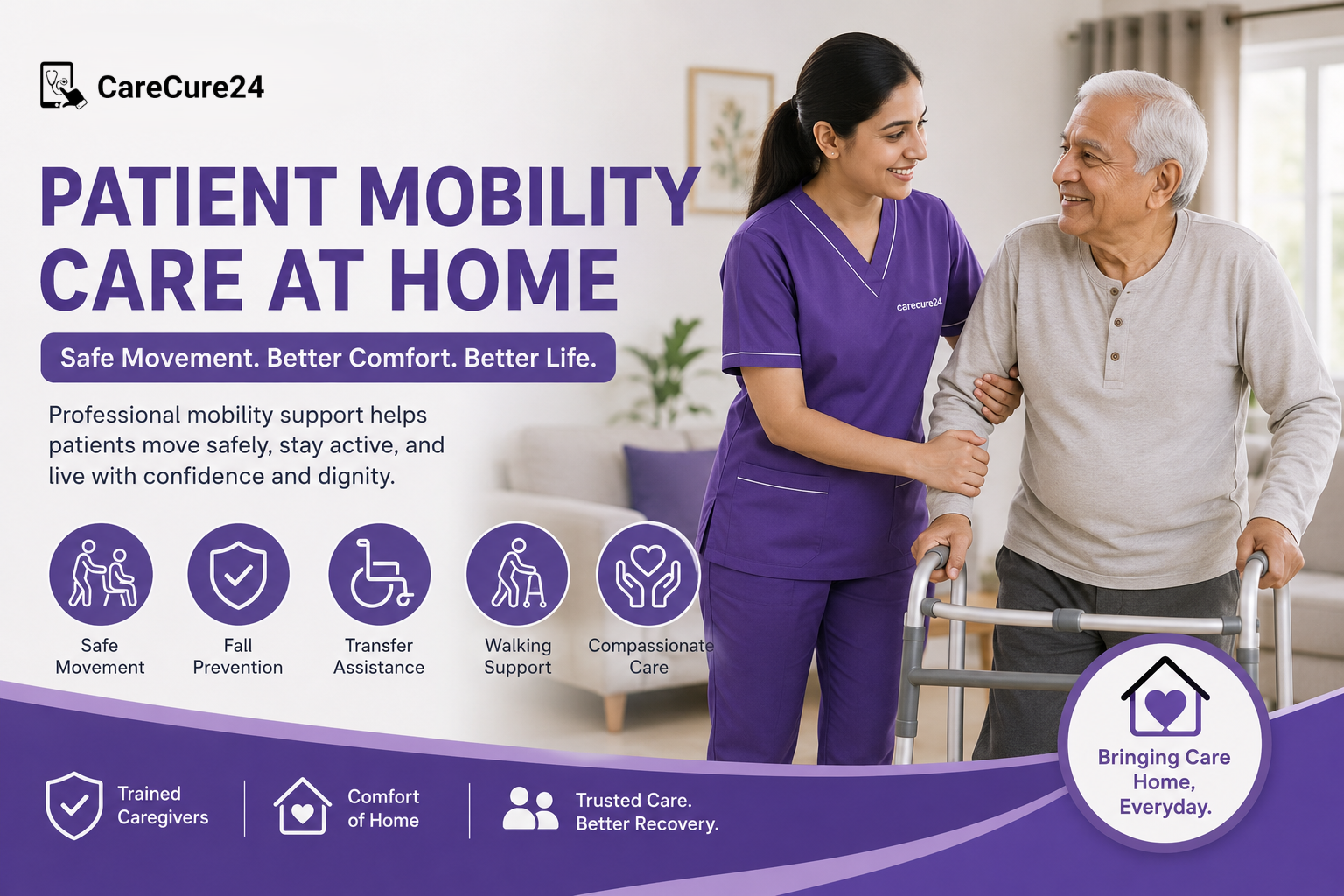
Many elderly and sick patients face difficulty while walking, standing, sitting, or moving from one place to another. Because of this, families often search for safe and professional patient mobility care at home services. Proper mobility support not only improves comfort but also helps patients live with more confidence and dignity.
Today, many families prefer home-based care because it feels safe, personal, and comfortable. Moreover, patients recover faster when they stay close to their loved ones. Therefore, mobility care services at home are becoming more important every day.
In this article, you will learn everything about mobility care services, their benefits, who needs them, and how professional caregivers help patients move safely at home.
What is Patient Mobility Care at Home?
Patient mobility care at home means helping patients move safely inside their homes. This support includes walking assistance, transferring patients from bed to wheelchair, helping during bathroom visits, and supporting daily movement activities.
Professional caregivers and nurses provide this service for elderly people, bedridden patients, stroke survivors, and post-surgery patients. In many cases, mobility support also includes light exercise and physical movement guidance.
Additionally, trained caregivers reduce the risk of falls and injuries. As a result, patients feel more secure and family members feel less stress.
Why Mobility Care is Important for Patients
Movement is very important for physical and mental health. However, many patients lose strength because of illness, surgery, age, or injury. Without proper support, they may become fully dependent on others. This is why professional patient mobility care at home plays a very important role in daily life and recovery.
Proper mobility support not only helps patients move safely but also improves their overall quality of life. In addition, regular movement keeps the body active and reduces many health risks caused by long-term bed rest or inactivity.
Prevents Bed Sores
When patients stay in one position for a long time, bed sores can develop. These sores are painful and may lead to serious infections if not treated properly. Regular movement and position changing reduce pressure on the skin and improve comfort.
Professional caregivers understand how to reposition patients safely. Therefore, patients remain more comfortable and healthier.
Improves Blood Circulation
Movement increases blood flow in the body. Therefore, patients feel healthier and more active. Good circulation also helps deliver oxygen and nutrients to different body parts. Moreover, proper blood circulation reduces swelling in the legs and lowers the risk of blood clots, especially in bedridden patients.
Reduces Muscle Weakness
Lack of movement makes muscles weak. Over time, patients may lose body strength and balance. Mobility support helps maintain muscle activity and body flexibility. Even small daily movements can improve strength gradually. As a result, patients may regain confidence in walking and standing.
Prevents Falls
Professional caregivers know safe movement techniques. Consequently, patients face fewer accidents. Elderly patients and stroke patients are especially at high risk of falling. Mobility caregivers provide balance support while walking, standing, or climbing stairs. This creates a safer home environment for patients.
Supports Faster Recovery
After surgery or a stroke, regular movement improves recovery speed. Doctors and physiotherapists often recommend early movement because it helps the body heal better.
Improves Mental Health
Patients feel happier and more confident when they can move safely. Staying active also reduces feelings of loneliness, sadness, and frustration. Furthermore, patients feel emotionally stronger when they maintain some level of independence in daily life.
Who Needs Mobility Care at Home?
Many people can benefit from mobility care at home services. Some common examples include:
- Elderly people with weak body strength
- Stroke patients with movement problems
- Bedridden patients
- Patients recovering after surgery
- Paralysis patients
- Parkinson’s disease patients
- Arthritis patients
- Patients with balance problems
- People recovering from fractures or injuries
Furthermore, mobility support is useful for patients who live alone or need daily assistance.
Services Included in Home Mobility Care
Professional home mobility nursing service near me providers usually offer different types of support according to patient needs. These services are designed to improve patient safety, comfort, and independence at home. Moreover, trained caregivers help patients move correctly and reduce the risk of injuries or falls.
Walking Assistance
Caregivers help patients walk safely inside the home. They also support patients while using walkers, sticks, or mobility aids. In many cases, elderly patients lose confidence while walking because they fear falling. Therefore, caregivers stay close to patients and provide balanced support during movement.
Bed to Wheelchair Transfer
Many patients cannot move independently. Nurses safely transfer patients from bed to wheelchair or chair to bed using proper support techniques. This service is very important for the elderly, stroke, paralysis, and post-surgery patients.
Bathroom Mobility Support
Bathroom falls are common among elderly patients. Therefore, caregivers provide safe bathroom assistance for patients with balance or movement problems. Nurses help patients enter and leave the bathroom safely while reducing the chance of slipping.
Exercise Support
Some caregivers help patients perform light movements and exercises recommended by doctors or physiotherapists. Gentle exercise improves flexibility, body movement, and muscle strength. Furthermore, exercise support is very helpful for stroke patients, elderly patients, and people recovering after surgery.
Position Changing
Bedridden patients need regular position changes to avoid pain and pressure sores. Caregivers gently change the patient’s body position every few hours to reduce pressure on the skin and muscles. Proper positioning improves blood flow and reduces body discomfort.
Stair Support
Patients often fear stairs because they can lose balance easily. Mobility caregivers provide balance support during stair movement and help patients climb or descend stairs safely.
Wheelchair Mobility Support
Some patients depend fully on wheelchairs for movement. Caregivers help patients move safely inside the home, during doctor visits, or while going outdoors.
Additionally, nurses ensure the wheelchair is positioned correctly to improve patient comfort and safety. Proper wheelchair handling also reduces strain on the patient’s body.
Night-Time Mobility Assistance
Many elderly patients need help moving during the night. Some patients may need bathroom support or walking assistance after waking up.
Daily Activity Assistance
Caregivers support dressing, sitting, standing, eating, and short walking activities. Many patients need help with simple daily tasks because of weakness or pain. Therefore, professional caregivers provide patient and respectful support according to individual needs.
Elderly Mobility Care Service at Home
Old age naturally reduces body strength and balance. Because of this, many senior citizens face walking difficulties. Professional elderly mobility care service helps older adults remain active and safe at home.
Caregivers understand the emotional needs of elderly patients. They provide patient and respectful support during movement activities. In addition, elderly people feel more comfortable receiving care at home rather than in hospitals.
Benefits for Senior Citizens
- Better safety at home
- Reduced fall risk
- Improved confidence
- Emotional comfort
- More independence
- Better daily routine
Therefore, many families now choose mobility assistance for elderly at home for long-term support.
Bedridden Patient Mobility Support at Home
Bedridden patients need special care because they cannot move independently. Without movement support, they may suffer from body pain, stiffness, and bed sores.
Professional caregivers provide:
- Regular body repositioning
- Gentle movement exercises
- Safe transfer support
- Hygiene assistance
- Muscle movement support
As a result, patients remain more comfortable and healthy.
Post Surgery Mobility Care at Home
After surgery, patients often feel weak and unstable. Moving incorrectly may cause pain or injury. Therefore, post surgery mobility care at home is very important.
Caregivers help patients:
- Walk safely after surgery
- Maintain balance
- Follow movement restrictions
- Avoid pressure on wounds
- Improve recovery speed
This service is especially useful after knee replacement, hip surgery, spinal surgery, or fracture treatment.
Stroke Patient Mobility Care Service
Stroke can affect body movement and balance. Many stroke patients need regular assistance for walking and daily activities.
Professional stroke patient mobility care service includes:
- Assisted walking support
- Transfer support
- Muscle movement assistance
- Fall prevention care
- Coordination with physiotherapy exercises
Additionally, caregivers encourage patients emotionally during recovery.
Physiotherapy and Mobility Care at Home
Many patients need both mobility support and physiotherapy. Together, these services improve body strength and movement ability.
Benefits of Combined Care
- Faster physical recovery
- Better balance
- Reduced stiffness
- Improved muscle strength
- More confidence during movement
Therefore, many families prefer physiotherapy and mobility care at home for better long-term results.
Role of a Mobility Care Nurse at Home
A professional mobility care nurse at home is trained to support safe patient movement. Nurses understand patient handling techniques and emergency response methods.
Duties of a Mobility Nurse
- Assisting patient movement
- Monitoring patient safety
- Supporting daily activities
- Preventing falls and injuries
- Helping during exercise sessions
- Giving emotional support
Moreover, experienced nurses provide comfort and confidence to both patients and family members.
Senior Citizen Walking Support Nurse
Many elderly patients only need support while walking. A senior citizen walking support nurse helps older adults move safely around the house or during short outdoor walks.
This service improves physical activity and reduces fear of falling. Consequently, elderly people become more active and independent.
How to Choose the Best Home Nursing for Mobility Patients
Choosing the right caregiver is very important because proper support can improve patient safety, comfort, and recovery. A trained and caring nurse not only helps with movement but also gives emotional confidence to the patient and family members.
Check Experience
Always choose caregivers who have experience in handling mobility patients. Experienced nurses understand how to safely support walking, lifting, repositioning, and transferring patients from bed to wheelchair. Moreover, experienced caregivers can quickly understand patient needs and provide better care during difficult situations.
Verify Training
Professional training ensures patient safety and proper handling techniques. Before hiring, ask whether the caregiver has training in:
- Patient lifting techniques
- Fall prevention methods
- Emergency response support
- Elderly patient care
- Bedridden patient support
- Mobility assistance equipment use
Trained nurses know how to reduce injury risks for both the patient and themselves. Additionally, trained professionals provide more confident and organized care at home.
Read Reviews
Online reviews and patient feedback help families understand service quality. Positive reviews usually show that the provider offers reliable and professional care.
While checking reviews, focus on:
- Overall professionalism
- Caregiver behaviour
- Service punctuality
- Patient satisfaction
- Emergency handling


You can ask neighbours, friends, or doctors for recommendations about trusted home nursing services.
Ask About Emergency Support
Emergencies can happen anytime during patient movement. Patients may suddenly lose balance, feel dizzy, or experience breathing problems. Therefore, caregivers should know basic emergency handling techniques. A prepared caregiver can react calmly and safely during unexpected situations.
Ensure Friendly Behaviour
Kind and respectful behaviour is extremely important in patient care. Many mobility patients already feel emotionally weak or dependent on others. Therefore, rude behaviour may increase stress and sadness. When patients feel emotionally comfortable, they cooperate better during mobility activities and recovery exercises.
Compare Pricing
Many families search for an affordable mobility care nursing service that still provides quality support. While low pricing may seem attractive, very cheap services may compromise caregiver quality or safety standards.
Instead of choosing only by price, compare:
- Caregiver experience
- Service hours
- Included support services
- Emergency assistance
- Patient handling quality
A balanced service with fair pricing and professional care is usually the best option for long-term patient support.
Benefits of Patient Mobility Assistance at Home
There are many advantages of receiving mobility support at home.
Comfortable Environment
Patients feel relaxed in familiar surroundings.
Personal Attention
Home care provides one-to-one support.
Lower Infection Risk
Home care reduces exposure to hospital infections.
Emotional Support
Family members stay close to patients.
Cost Effective
Home care is often more affordable than hospital stays.
Therefore, more families now choose patient mobility assistance at home services for long-term care.
Conclusion
Proper patient mobility care at home improves safety, comfort, and quality of life for patients. Whether the patient is elderly, bedridden, recovering from surgery, or healing after a stroke, mobility support helps them stay active and confident.
Moreover, professional caregivers reduce stress for family members and create a safer home environment. Today, home-based mobility care services are becoming an important part of modern healthcare because they provide personal, affordable, and compassionate support.
If your loved one needs safe movement assistance, choosing a trusted home mobility care service can make daily life easier and healthier for everyone.