

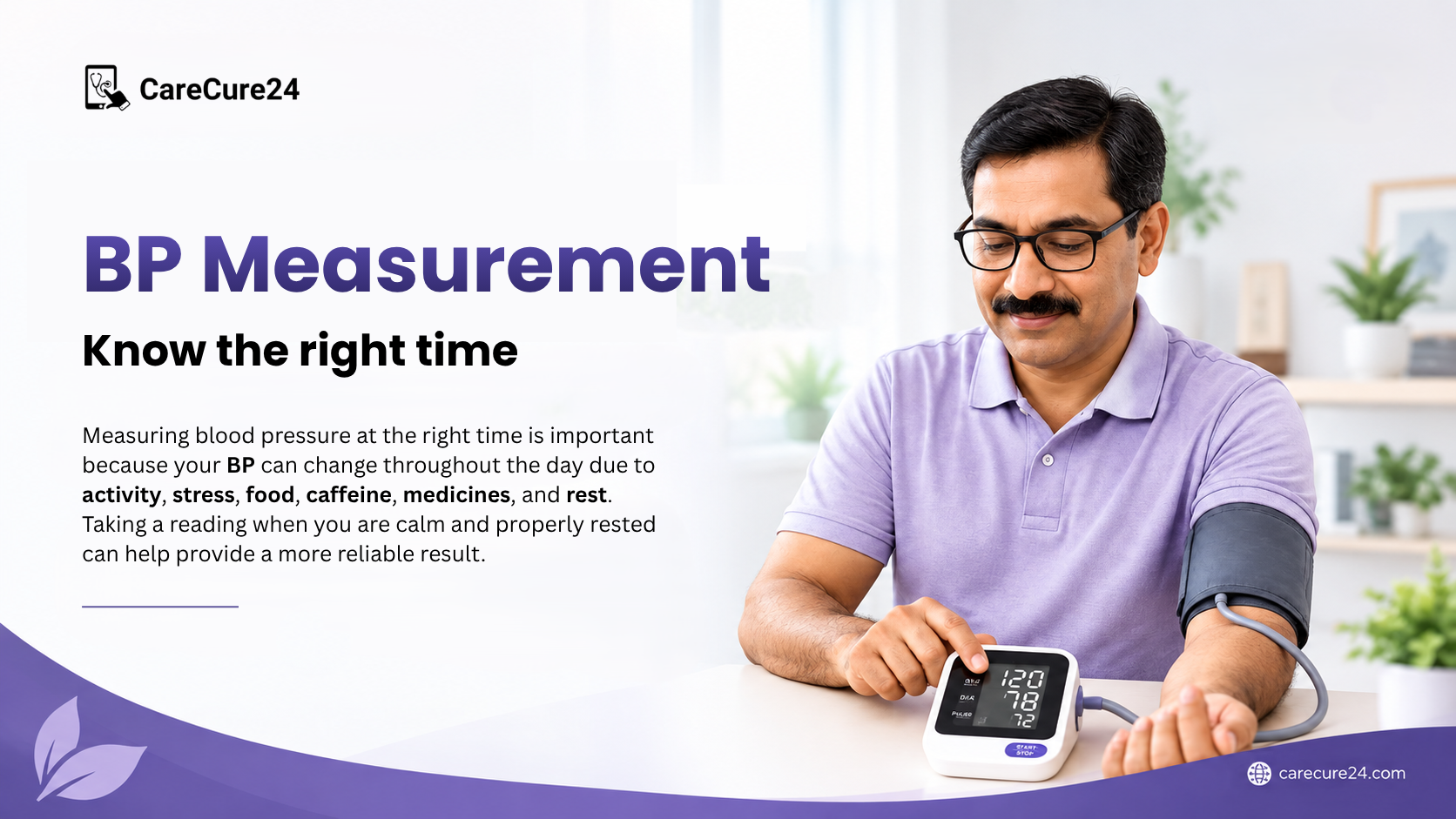
Blood pressure is one of the simplest health measurements we can take at home. A small digital monitor can tell us our blood pressure within a few minutes. However, there is one thing many people do not think about: when should we actually measure it?
You may have noticed that your blood pressure reading is not always the same. One day it may be 120/80, while another day it may be slightly higher or lower. This does not always mean that something is wrong.
Blood pressure naturally changes throughout the day. Physical activity, stress, food, caffeine, smoking, medicines and even the way you sit can affect a reading. Therefore, the timing and method of measurement matter if you want a more reliable reading.
Timing of BP Measurement Matter?
Think of a blood pressure reading as a snapshot of what is happening in your body at that particular moment.
For example, imagine that you have just climbed stairs, rushed to work, had a cup of strong tea or coffee, or become worried about something. Your blood pressure may temporarily change.
If you immediately check your BP, the number may not represent your usual resting blood pressure.
This is why healthcare professionals recommend taking blood pressure when you are calm and properly rested. Measuring it under similar conditions each time also makes it easier to compare your readings over several days.
So, The Best Time to Measure Blood Pressure?
There is no single “perfect” time that is suitable for everyone.
For people who have been advised to monitor their blood pressure at home, a healthcare professional may recommend checking it at specific times. In many home-monitoring routines, readings are taken in the morning and in the evening, at roughly the same times each day.
The American Heart Association’s home BP guidance recommends taking readings at the same time each day and following your healthcare professional’s advice about how often to measure.
For some people, morning readings may be taken before breakfast and before taking their usual BP medication, if that is what their healthcare professional has instructed. Evening readings may also be useful when monitoring is recommended twice daily.
The important point is consistency. Instead of checking randomly at different times, follow a routine recommended for you.
What Should You Do Before Measuring BP?
Getting the timing right is only part of the process. Your preparation also matters.
1. Rest quietly for at least 5 minutes
Before taking your reading, sit comfortably and relax for at least five minutes. Avoid talking, using your phone or doing other activities while resting. This gives your body a chance to settle before the measurement.
2. Avoid caffeine, smoking and exercise beforehand
Try not to smoke, drink caffeinated beverages or exercise for at least 30 minutes before measuring your BP. These activities can temporarily affect your blood pressure reading.
So, if you have just finished exercising or had your morning tea or coffee, it may be better to wait before checking your BP.
3. Empty your bladder
A full bladder can affect a blood pressure reading. It is therefore recommended to use the bathroom before measuring your BP.
It is a small step, but it can help you get a more reliable measurement.
Your Sitting Position Also Matters
You may think that simply sitting down and pressing the button on a BP machine is enough. But your posture can also influence the result.
For a proper reading:
- Sit in a chair with your back supported.
- Keep both feet flat on the floor.
- Do not cross your legs.
- Keep your arm supported on a flat surface.
- Keep the cuffed arm around heart level.
- Place the cuff on bare skin, not over clothing.
- Stay quiet and still while the machine is measuring.
These steps may seem simple, but following them consistently can make your readings more useful.
How Many Times Should You Measure BP?
Taking just one reading may not always give you the full picture.
The American Heart Association recommends taking at least two readings, about one minute apart, and recording the results when monitoring at home.
For people who have been asked by their healthcare professional to keep a BP record, readings over several days can provide much more useful information than a single measurement.
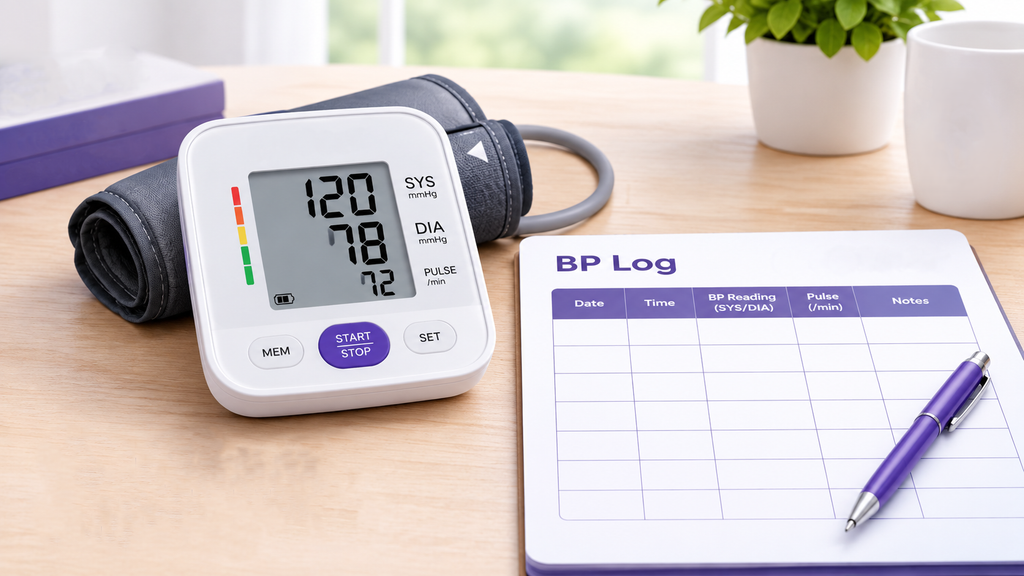
A BP diary can include:
Date | Time | BP Reading | Pulse | Notes
You can also make a note if you had unusual stress, exercise, caffeine or other circumstances that might have affected the reading.
Why Is Regular BP Monitoring Useful?
High blood pressure often does not cause obvious warning symptoms. A person may feel completely normal while their blood pressure is elevated.
That is one reason regular monitoring can be useful, particularly for people who have already been diagnosed with high blood pressure or have been advised by their healthcare professional to monitor it at home.
Regular readings can help you and your healthcare professional understand your blood pressure pattern over time.
It can also help show whether a treatment plan is working as expected.
However, home BP monitoring does not replace regular medical check-ups, and you should not change or stop prescribed BP medicines simply because your home readings look better.
What If One Reading Is High?
Don’t panic because of one unusual reading.
Blood pressure can change for many temporary reasons. If you get a higher-than-usual result, sit quietly and repeat the measurement according to proper technique. Record both readings and discuss repeated or concerning readings with your healthcare professional.
However, a very high reading should not simply be ignored.
If your BP is above 180/120 mm Hg, wait at least one minute and measure again. If it remains that high, contact a healthcare professional promptly. If a very high reading occurs together with symptoms such as chest pain, shortness of breath, weakness, numbness, vision changes or difficulty speaking, seek emergency medical help immediately.
Choose the Right BP Monitor
The quality and type of BP monitor can also matter.
The American Heart Association recommends an automatic upper-arm cuff-style monitor for home monitoring. Wrist and finger monitors are generally considered less reliable. The cuff should also be the correct size for your arm.
If possible, take your home BP monitor to a healthcare appointment so that a healthcare professional can check whether you are using it correctly and compare its readings with their equipment.
A Simple BP Measurement Routine
If your healthcare professional has asked you to monitor your BP regularly, you can follow a simple routine:
Step 1: Choose a consistent time.
Step 2: Avoid caffeine, smoking and exercise for 30 minutes beforehand.
Step 3: Empty your bladder.
Step 4: Sit quietly for at least 5 minutes.
Step 5: Sit with your back supported and feet flat on the floor.
Step 6: Place the cuff correctly on your bare upper arm.
Step 7: Support your arm at heart level.
Step 8: Do not talk or move during the measurement.
Step 9: Take a second reading about one minute later.
Step 10: Record the readings and share them with your healthcare professional when needed.
The Bottom Line
Measuring blood pressure is easy, but measuring it correctly is more important than simply measuring it frequently.
Try to measure your BP at a consistent time, when you are calm and rested. Avoid caffeine, smoking and exercise shortly beforehand; use the correct cuff and maintain the proper sitting position.
Most importantly, don’t judge your health based on one isolated number. A series of properly taken readings over time can give a much clearer picture of your blood pressure.
If you have high blood pressure or have been advised to monitor your BP at home, follow the monitoring schedule recommended by your healthcare professional.