

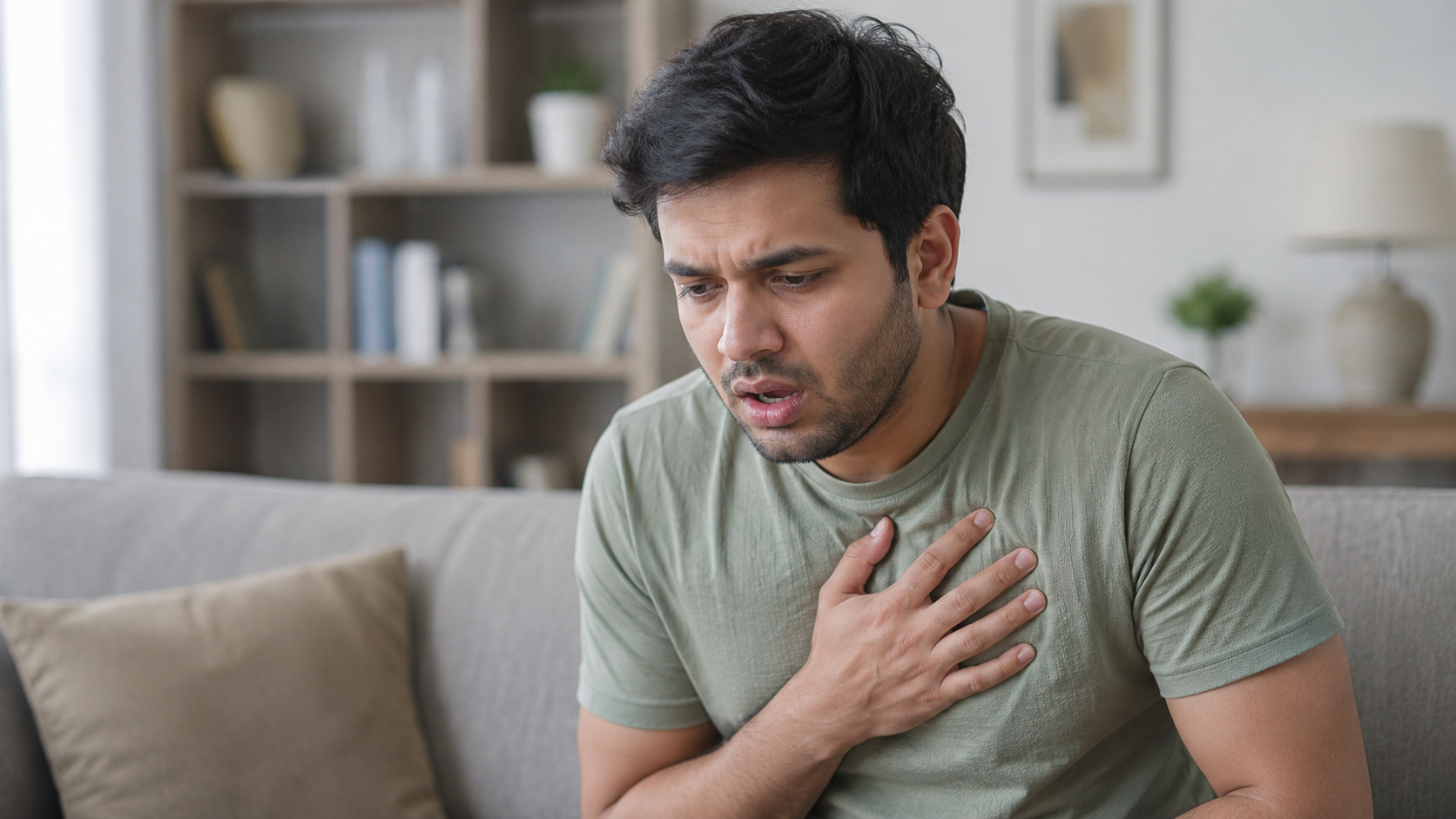
Shortness of breath is a common health complaint, but its real cause is not always easy to understand. Some people feel breathless after walking a short distance, while others may experience breathing difficulty even when they are resting. In some patients, routine tests may appear normal, yet the person continues to feel that they cannot breathe comfortably.
This is why it should not always be treated as a simple breathing problem. It can be related to the lungs, heart, blood, muscles, anxiety, or several conditions happening together.
Shortness of Breath Actually Means
It means feeling that you are not getting enough air or that breathing requires more effort than usual. Some people describe it as:
- Feeling unable to take a deep breath
- Tightness in the chest
- A feeling of suffocation
- Needing to breathe faster
- Getting tired while walking
- Feeling breathless while lying down
- Needing to stop frequently during normal activities
The experience can be different from one patient to another. Therefore, simply asking, “Are you having difficulty breathing?” may not give the complete picture.
Why Is the Cause Sometimes Difficult to Find?
Breathing depends on several body systems working together. The lungs bring oxygen into the body, the heart carries oxygen-rich blood, and the muscles help the body use that oxygen.
If one part of this system is affected, breathing may become difficult.
However, the situation can become complicated when basic tests do not clearly show the problem. For example, a patient may have a normal oxygen saturation level but still feel breathless. Oxygen saturation tells us about the amount of oxygen carried in the blood at that moment. It does not explain every possible reason for breathing discomfort.
Similarly, a normal chest X-ray does not automatically mean that the lungs and heart are completely healthy.
Common Causes of Shortness of Breath
There are many possible causes of shortness of breath. Some are temporary and mild, while others need medical attention.
1. Lung Problems
Conditions such as asthma, chronic obstructive pulmonary disease (COPD), pneumonia and other lung disorders can affect breathing.
Asthma may cause episodes of wheezing, chest tightness and breathing difficulty. COPD may cause long-term breathlessness, especially during physical activity. Some lung problems may require more detailed testing, such as pulmonary function tests, rather than relying only on a basic examination.
2. Heart-Related Problems
The heart and lungs work closely together. Certain heart conditions can make a person feel breathless, particularly during exercise or when lying down.
Some patients may also experience swelling of the legs, unusual tiredness, chest discomfort or a rapid heartbeat. In these situations, the problem may not be primarily inside the lungs. A medical evaluation of the heart may be necessary.
3. Anaemia
Anaemia occurs when the blood does not have enough healthy red blood cells or haemoglobin to carry oxygen effectively. With anaemia may complain of tiredness, weakness, dizziness, fast heartbeat and shortness of breath, especially while walking or climbing stairs.
This is one reason for blood test can sometimes be important when investigating unexplained breathlessness.
4. Lack of Physical Fitness
Not every episode of breathlessness is caused by disease. A person who is physically inactive may become breathless after climbing stairs or walking quickly. This can happen because the body is not accustomed to physical activity.
However, it is important not to assume that poor fitness is the cause without considering other symptoms and medical history.
5. Anxiety and Stress
Emotional stress can strongly affect breathing. During anxiety or panic, a person may breathe quickly or feel unable to take a satisfying breath. Chest tightness, dizziness, trembling and a racing heartbeat may also occur.
This does not mean the symptoms are “imaginary.” The breathing sensation is real. However, anxiety should generally be considered after appropriate medical causes have been assessed, particularly when symptoms are new or severe.
When Different Problems Exist Together
One of the most confusing situations occurs when a patient has more than one condition.
For example, an older person may have mild COPD, anaemia, reduced physical fitness and a heart problem at the same time. Each condition may contribute a little to the patient’s breathing difficulty.
In such cases, finding one abnormal test result may not completely explain the symptoms.
Why Symptoms Matter as Much as Test Results
Medical tests are important, but the patient’s symptoms and history are also valuable.
A doctor may want to know:
- When did the breathing problem begin?
- Does it happen during walking or while resting?
- Does it become worse at night?
- Is it worse when lying flat?
- Is there a cough or wheezing?
- Is there chest pain?
- Has the patient gained or lost weight recently?
- Is there swelling of the feet or legs?
- Does the patient feel dizzy or faint?
- Is there a history of smoking?
- Are there known heart or lung diseases?
The answers can help a healthcare professional understand the pattern of the problem and decide which investigations may be appropriate.
Normal Oxygen Means Not Always Everything Is Normal
Many families immediately check oxygen saturation when someone complains of breathing difficulty. This can be useful, but it should not become the only measure of respiratory health.
A person can experience breathlessness for reasons that do not immediately cause a low oxygen reading. For example, anaemia, heart problems, anxiety, poor exercise tolerance and some early respiratory conditions may cause significant symptoms without an obvious fall in oxygen saturation.
Therefore, shortness of breath always deserves proper clinical assessment rather than relying only on a pulse oximeter.
When Should Shortness of Breath Be Taken Seriously?
Sudden or severe breathing difficulty should never be ignored.
Seek urgent medical attention if breathlessness occurs with symptoms such as:
- Severe chest pain or pressure
- Bluish lips or face
- Fainting or severe dizziness
- Confusion
- Severe weakness
- Coughing up blood
- Very fast or irregular heartbeat
- Sudden severe breathing difficulty
- Rapid worsening of symptoms
These symptoms can sometimes indicate a serious medical condition requiring immediate treatment.
Tests May Be Needed
The tests depend on the patient’s symptoms, age, medical history and physical examination. A healthcare professional may consider investigations such as:
- Complete blood count to check for anaemia
- Chest X-ray
- ECG
- Echocardiography
- Pulmonary function tests
- Blood tests
- Exercise-related assessment
- Other imaging or specialist investigations when necessary
Not every patient needs every test. The goal is to choose investigations that can help explain the particular patient’s symptoms.
Do Not Treat Breathlessness Only as a Symptom
Shortness of breath is a symptom, not a diagnosis. Using an inhaler, oxygen, or another treatment without understanding the underlying cause may not solve the actual problem. Some patients may need respiratory treatment, while others may require cardiac care, correction of anaemia, physical rehabilitation or management of anxiety.
Some patients’ shortness of breath is not understood very clearly at first. This does not necessarily mean that the symptoms are minor or that the patient is imagining them. Breathing is influenced by the lungs, heart, blood, muscles and even the nervous system. Because these systems are connected, identifying the exact cause can sometimes require careful evaluation.
If breathlessness is persistent, worsening, occurs with normal daily activities, or is associated with other concerning symptoms, professional medical assessment is important.