

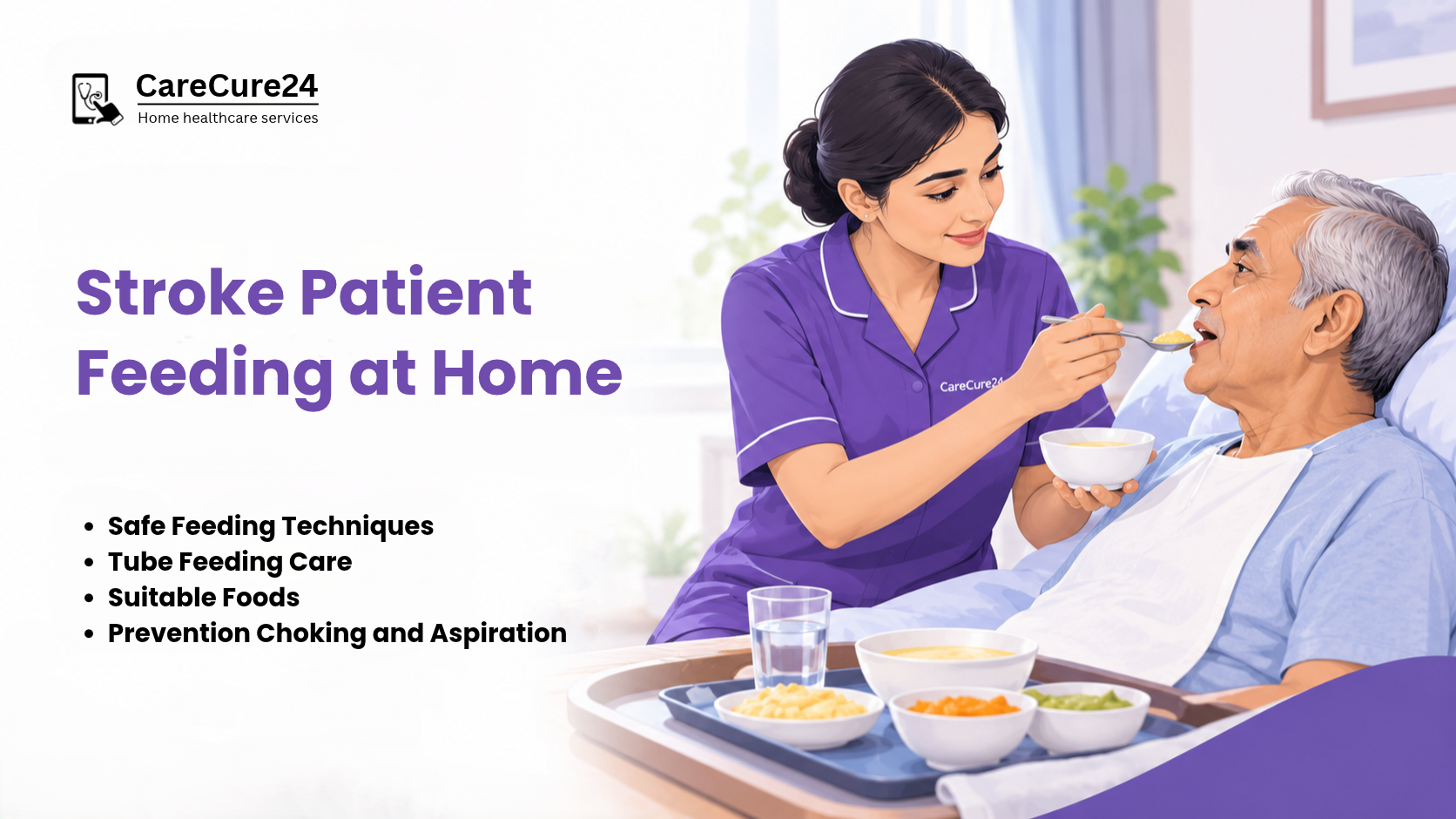
The most important question after a stroke is how to feed the patient. Many patients experience weakness in their arms and legs, difficulty speaking, and even difficulty swallowing. As a result, the patient’s family may not understand what foods to feed them, how to feed them, and which foods to avoid.
Proper nutrition helps maintain the patient’s physical strength and rehabilitation. However, if the patient has trouble swallowing, food or water can enter the airway due to improper feeding. This is called aspiration, which can increase the risk of lung infection.
Knowing the rules for safe feeding for stroke patients, selecting appropriate foods, and important points for caring for the patient at home will make care more convenient.
Important to know before feeding a stroke patient
Not every patient has the same ability to eat after a stroke. Some can eat normally, while others have difficulty chewing or swallowing food. This problem is called dysphagia in medical terms.
Therefore, it is important to first make sure that the patient can swallow food and water safely through the mouth.
- The patient’s swallowing ability should be tested by a trained health worker or a related specialist.
- If there is a problem with swallowing, it is best to seek advice from a Speech and Language Therapist.
- The type, consistency, and quantity of food should be adjusted according to the doctor’s instructions.
- It is best not to give the patient food, water, or medicine by mouth until you are sure that the patient can swallow safely.
Especially in the case of a new stroke, food, water, or medicine should not be given by mouth before the swallowing test is performed.
Feeding the patient after a stroke
Once the doctor has confirmed that the patient can eat by mouth, the following rules can be followed.
Positioning the patient correctly
The patient should be seated as upright as possible during feeding. If the patient is in bed, a sitting position should be created using pillows or suitable supports.
The patient’s head should not be tilted excessively backwards during feeding. If the patient’s specific physical condition requires special postures, a therapist should be consulted.
Food should be given in small portions
A large amount of food should not be given at one time. A small amount of food should be given with a small spoon, and the next meal should be given after the patient has swallowed it completely. Care should be taken to ensure that the patient does not eat in a hurry. If food accumulates in the mouth, more food should not be given.
Stop talking while feeding
The patient should not be talked to while eating. Distracting things like TV or mobile phones should be kept away. It is better not to lie down the patient immediately after finishing eating. He should be kept in an upright position for at least 30 minutes, unless the doctor has instructed otherwise.
Food for stroke patients
Food selection for a patient after a stroke should be based on their ability to swallow, nutritional needs, diabetes, kidney problems, and other physical conditions.
| Types of food | Possible examples |
|---|---|
| Soft food | Well-cooked and mashed vegetables, suitable soft food |
| Protein-rich food | Soft eggs, well-cooked fish, pulses |
| Sources of energy and nutrition | Suitable soft rice, oats or semolina |
| Fruit | Mashed or pureed fruit according to the patient’s ability to swallow |
| Liquid food | Water, milk or suitable liquid as directed by the doctor |
Remember: This list is not the same for everyone. Soft foods can also be dangerous if the patient has difficulty swallowing. Some patients may have difficulty swallowing if the food contains grains, solids, or separated thin liquids. Therefore, it is important to determine the correct consistency and texture of the food with the advice of a specialist.
If a stroke patient has trouble swallowing
Coughing while eating food through the patient’s mouth, repeated throat clearing, food getting stuck in the mouth, or a wet or hoarse voice after eating may be signs of swallowing problems.
If happen:
- The patient’s condition should be assessed after stopping feeding.
- Food may be softened, smoothed, or pureed as needed.
- Some patients may need to thicken fluids, but this should be done as directed by a specialist.
- If the patient is unable to take in enough food or water by mouth, the doctor may consider the need for a feeding tube.
Important: Just because water is thin doesn’t mean it’s always safe. Also, not all patients need to thicken their water. Incorrectly changing the consistency of food can make things worse.
Foods to avoid
The following foods should be considered with special caution in patients who have difficulty swallowing:
- Hard and dry foods, such as nuts, biscuits or hard bread.
- Hard, fibrous or hard-to-chew foods.
- Small grains or pieces of food, which are difficult to control in the mouth.
- Thin water or liquids, if the patient has difficulty swallowing on examination.
- Foods mixed with solid foods and liquids, if it is not safe for the patient.
These are not completely off-limits for every patient. Which foods to avoid should be determined based on the patient’s swallowing test results.
Precautions to be taken when feeding through a feeding tube
Some patients cannot safely swallow food by mouth. In such cases, the doctor may recommend the use of a nasogastric tube (NG tube) inserted through the nose into the stomach or another type of feeding tube (Ryle’s tube), depending on the situation.
- The doctor’s prescribed feeding, amount, and schedule should be followed.
- The trained method of ensuring the tube is in place should be followed.
- The patient’s position and care rules should be followed while feeding.
- If the tube is blocked, dislodged, or the patient has difficulty breathing, the tube should not be continued on its own.
- Before administering medication through the tube, a doctor or pharmacist should be consulted.
It is important to maintain oral hygiene even when using a feeding tube. If a tube is needed, it is best to have a trained nurse take care of the patient.
Tips for family members to take care of the patient
Patience, regular monitoring, and proper training of family members are very important in caring for a patient after a stroke.
- Maintain a specific feeding schedule as per the doctor’s instructions.
- Note how much food the patient is eating.
- Maintain oral hygiene before and after each feeding.
- The patient’s sitting position and the texture of the food should be well understood.
- The patient should not be forced to feed.
- If there is a problem with swallowing, no new method should be used without necessary training. If necessary, the doctor’s permission should be obtained for new methods.
If the patient finds it difficult to care for themselves at home, they should take the help of a trained nurse or appropriate home care service.
Last words
The most important things to consider when feeding a patient after a stroke are ensuring safe swallowing, positioning, and maintaining adequate nutrition. Since each patient is different, no single diet or feeding method is right for everyone.
If family members follow the doctor’s instructions, recognise signs of the patient’s inability to eat, and regularly monitor the patient’s nutrition, the patient can be cared for at home.
However, it is especially recommended that a trained nurse be involved in this care.