

What is Tracheostomy Care?

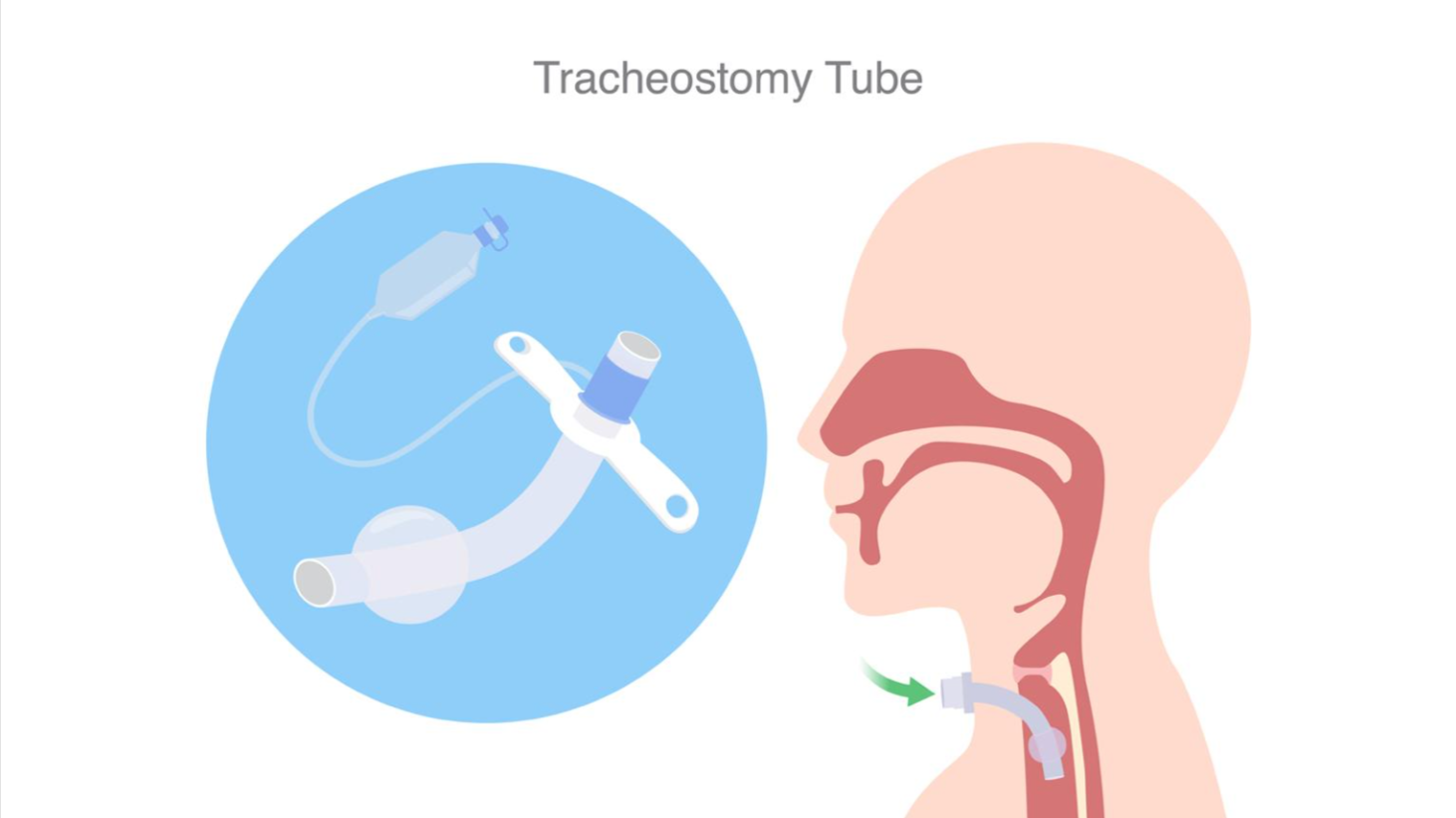
Tracheostomy care means taking care of a special tube placed in the neck to help a patient breathe. This tube is called a tracheostomy tube.
A tracheostomy is a small hole made in the neck that connects directly to the windpipe (trachea). This helps air go directly into the lungs when normal breathing is difficult.
In simple words:
It is a life-saving breathing support system that needs daily care at home.
Why Tracheostomy Care at Home is Important
Tracheostomy care at home is not just a daily task; it is a very important responsibility that directly affects the patient’s life. When a person has a tracheostomy tube, their normal breathing system changes. Because of this, regular and proper care becomes necessary to keep them safe and healthy.
First of all, good tracheostomy care helps in preventing infections. The opening in the neck (stoma) is very sensitive. If it is not cleaned properly, bacteria can enter easily. As a result, this may lead to serious infections. Therefore, daily cleaning and hygiene are very important.
Secondly, it helps the patient breathe easily and comfortably. Normally, our nose filters and moistens the air. However, in tracheostomy patients, air goes directly into the lungs. Because of this, mucus can become thick and block the tube. With proper tracheostomy care, such as suctioning and humidification, breathing becomes smoother and safer.
Moreover, regular care helps in avoiding sudden emergencies. For example, if mucus blocks the tube or the tube becomes loose, it can create a dangerous situation. But when caregivers check the tube regularly, they can identify problems early and take quick action.
In addition, proper tracheostomy care improves the patient’s comfort and quality of life. A clean and well-maintained stoma reduces irritation, pain, and bad smell. As a result, the patient feels more relaxed and confident in daily life.
Finally, home care also reduces the need for frequent hospital visits. With proper training and routine, families can safely manage tracheostomy care at home.
Who Needs Tracheostomy Care?
A patient may need tracheostomy care if:
- There is an airway blockage
- Long-term ventilator support is needed
- Severe lung disease is present
- Neurological problems affect breathing
Basic Equipment Needed for Tracheostomy Care

For safe and effective tracheostomy care, having the right equipment at home is very important. Without proper tools, it becomes difficult to maintain hygiene and keep the airway clear. Therefore, every caregiver should prepare a complete tracheostomy care kit before starting daily care.
Before starting care, you must have:
1. Suction Machine
A suction machine is one of the most important devices in tracheostomy care. It helps remove mucus from the tracheostomy tube. Because if mucus builds up, it can block breathing.
2. Suction Catheter
This is a thin, flexible tube connected to the suction machine. It goes inside the tracheostomy tube to remove mucus. However, it must be used carefully and should be clean or sterile.
Always use a new or properly cleaned catheter to avoid infection.
3. Sterile Water or Normal Saline
Sterile water or saline is used for cleaning the tube and moistening mucus. Sometimes, thick mucus becomes hard to remove. In such cases, a few drops of saline can help loosen it. Therefore, it plays an important role in smooth tracheostomy care.
4. Gauze and Dressing
Gauze is used to clean and cover the skin around the tracheostomy. It helps keep the area dry and prevents infection. Moreover, regular dressing changes reduce skin irritation and bad smell.
5. Clean Gloves (Disposable)
Gloves protect both the patient and the caregiver. Before touching the tracheostomy tube, always wear clean gloves.
This simple step greatly reduces the risk of infection.
6. Humidifier
In normal breathing, air passes through the nose, which adds moisture. But in a tracheostomy, air goes directly into the lungs. So, a humidifier is needed to keep the air moist.
7. Tracheostomy Ties or Straps
These are used to hold the tube in place around the neck. They should not be too tight or too loose.
A proper fit ensures comfort and safety during tracheostomy care.
8. Hand Sanitizer and Cleaning Supplies
Cleanliness is the base of all tracheostomy care. So, always keep hand sanitizer, clean towels, and disinfectants nearby.
This helps maintain a safe and hygienic environment.
Step-by-Step Tracheostomy Care at Home
1. Wash Hands Properly
First, always wash your hands before touching the tube.
This prevents infection.
2. Clean the Stoma (Neck Area)
- Use clean water or mild soap
- Clean gently around the hole
- Keep the area dry
This should be done daily to avoid infection.
3. Suctioning (Very Important)


Suctioning removes mucus from the tube.
- Insert the suction catheter carefully
- Remove mucus slowly
- Do not over-suction
This is important because mucus can block breathing and cause infection.
4. Change Dressing
- Replace gauze daily
- Keep the area clean and dry
- Prevent skin irritation
5. Check Tube Position
- Make sure the tube is not loose
- The tie should not be too tight
- You should fit 2 fingers under the tie
6. Maintain Humidity
Because air does not pass through the nose:
- Use humidifier
- Give enough fluids
This keeps the mucus thin and easy to remove.
Daily Care Routine (Simple Chart)
| Time | What to Do |
|---|---|
| Morning | Do suction if mucus is present & Give fluids / use a humidifier |
| Afternoon | Do suction if mucus is present & give fluids / use a humidifier |
| Evening | Clean around the stoma again & change dirty gauze if needed |
| Night | Check breathing and tube position |
Important Do’s and Don’ts
Do’s
- Always keep an extra tube ready
- Keep the suction machine nearby
- Maintain cleanliness
- Follow the doctor’s instructions
Don’ts
- Do not touch the tube with dirty hands
- Do not ignore mucus buildup
- Do not allow water inside the tube
Common Complications of Tracheostomy Tube Care
Even if you follow proper tracheostomy care, some problems can still happen. However, early understanding helps you act fast and keep the patient safe. Therefore, it is very important to know these complications in simple words.
- Infection– Infection is one of the most common problems. It can happen around the stoma (hole in the neck) or inside the airway. Usually, it occurs when cleaning is not done properly or when germs enter the area.
- Bleeding– Sometimes, light bleeding can happen, especially during cleaning or suctioning. However, heavy bleeding is not normal and needs attention.
- Tube blockage– Tube blockage is a serious problem because it can stop breathing. It usually happens when thick mucus collects inside the tube.
- Difficulty in speaking– After a tracheostomy, many patients find it hard to speak. This happens because air does not pass through the vocal cords in the usual way.
- Lung infection– If mucus is not cleared properly, it can go into the lungs and cause infection. This is also known as a chest infection.
These complications are possible after tracheostomy and must be monitored carefully.
Tips for Safe Tracheostomy Care at Home
- Keep the patient in a clean environment
- Avoid smoke and dust
- Wash your hands before every care
- Follow regular doctor visits
Why Professional Home Nursing Care is Better
Professional home nursing care makes tracheostomy care much safer and easier for patients and families. At home, many small mistakes can happen because the procedure needs proper skill and daily attention. However, trained nurses know exactly how to handle every step with care and confidence.
First of all, professional nurses are trained in suctioning, cleaning, and tube management. Therefore, they can prevent common problems like infection, tube blockage, and breathing difficulty. In addition, they follow proper hygiene rules, which helps keep the patient safe at all times.
“Proper schedule and expert help improve patient safety at home.”
Therefore, trained nurses do all processes safely:
They know how to do suction safely
They follow the correct steps and use clean equipment. As a result, the patient can breathe easily without any risk. In addition, proper suctioning helps remove mucus without causing pain or injury.
Nurses help prevent infection
They always maintain hygiene, clean the stoma properly, and change dressings on time. Therefore, the chances of infection become very low. At the same time, they can quickly notice early signs of infection and take action.
Handles emergency situation
If the tube gets blocked or the patient has breathing difficulty, they know what to do immediately. Because of this, the patient gets quick support, which can be life-saving.
Conclusion
Tracheostomy care at home is very important and should be done carefully every single day. Even small mistakes can create serious problems, so regular and proper care is necessary.
First of all, it helps the patient breathe in a safe and comfortable way. In addition, it keeps the airway clean and clear, which is very important for survival. Moreover, proper tracheostomy care helps prevent serious complications like infection, blockage, and breathing difficulty.
At the same time, good daily care improves the patient’s overall quality of life. The patient feels more relaxed, more comfortable, and more confident at home. As a result, both the patient and family members feel less stress.
Therefore, always follow proper hygiene, stay alert for warning signs, and take medical help whenever needed. With proper training, simple steps, and regular monitoring, you can manage tracheostomy care safely at home.