

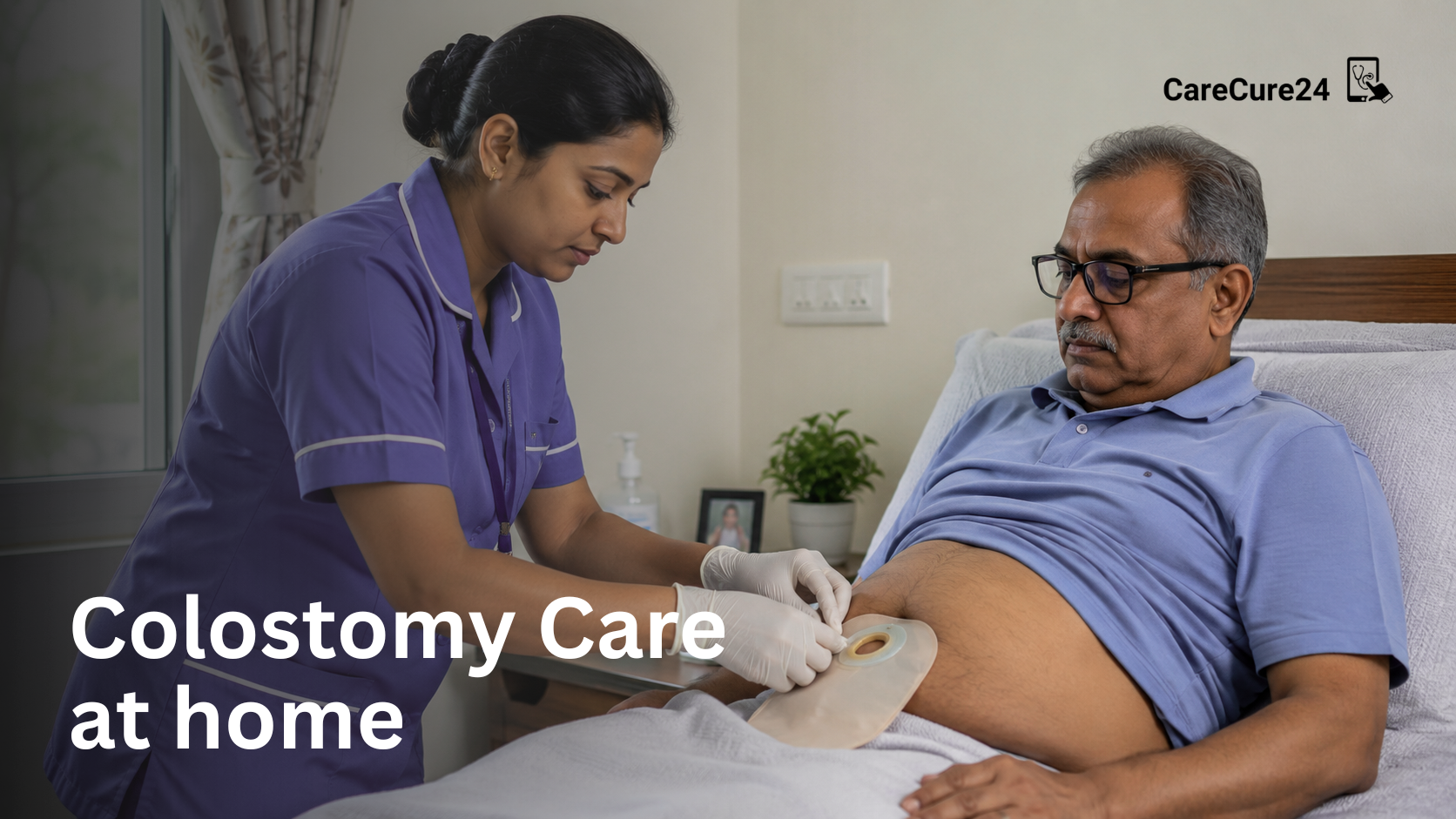
Living with a colostomy can feel difficult at first. However, with proper colostomy care, most people can learn to manage their stoma and colostomy bag safely at home. Family members can also learn the basic steps and help the patient when needed.
A colostomy is a surgical opening called a stoma. It connects part of the colon to an opening on the abdomen. Through this opening, stool leaves the body and goes into a special bag called a colostomy pouch.
What Is Colostomy Care?
Colostomy care means looking after the stoma, the skin around it, and the colostomy pouch. The main goal is to keep the stoma healthy, prevent leaks and protect the skin.
At first, a patient may need help from a nurse or family member. Over time, many patients become comfortable doing their own care.
How to Take Care of a Colostomy at Home
Good colostomy care at home does not have to be complicated. However, it should be done carefully.
1. Keep Your Hands Clean
First, wash your hands properly before touching the pouch or stoma. Also, clean your hands after finishing the procedure. This simple step helps reduce the chance of infection.
2. Check the Stoma
A healthy stoma is usually moist and pink or red. After surgery, it may look swollen or slightly different while it heals. Therefore, check it regularly and learn what is normal for you.
If the stoma suddenly changes colour, becomes very dark, gets injured or starts bleeding heavily, contact your doctor or ostomy nurse.
3. Keep the Skin Around the Stoma Clean
The skin around the stoma should normally look similar to the other skin on your abdomen. Stool can irritate this skin, especially when there is leakage.
Gently clean the area with water. Then, dry the skin completely before putting on a new pouch or skin barrier. Avoid rough rubbing because it can damage the skin.
4. Use the Correct Pouch Size
The opening of the skin barrier should fit the stoma properly. If the opening is too large, stool may touch the skin and cause irritation. On the other hand, if it is too small, it can hurt or press against the stoma.
Therefore, ask an ostomy nurse to help you choose the correct pouching system if you are unsure.
Changing a Colostomy Bag
Changing the pouch is an important part of stoma bag care. First, prepare all the supplies you need. Then gently remove the old pouch and clean the skin around the stoma.
After that, make sure the skin is completely dry. Apply the new skin barrier and pouch carefully. Finally, gently press the barrier against the skin to help create a good seal.
Many people change their pouching system every few days, but the exact schedule can be different for each person. Change it sooner if there is leakage, itching, burning or skin irritation.
Preventing Skin Problems
Skin problems are common when the pouch does not fit properly. Therefore, good colostomy skin care is very important.
Try to:
- Keep the skin clean and dry.
- Make sure the pouch fits correctly.
- Avoid pulling the skin barrier off quickly.
- Change the pouch before repeated leakage occurs.
- Tell your healthcare professional if redness or soreness continues.
If the skin becomes very red, painful, wet or damaged, contact your doctor or ostomy nurse.
Food, Water and Daily Life
After a colostomy, eating habits may need some adjustment. However, there is no single diet that is perfect for everyone. Your healthcare team can guide you based on your condition.
Also, drink enough fluids unless your doctor has told you to limit fluids. Notice how different foods affect your stool, gas and comfort.
Furthermore, a colostomy does not always mean that you must stop normal activities. Many people return to their usual daily life after recovery.
When Should You Call a Doctor?
Contact your doctor or ostomy nurse if you notice:
- Heavy or continuous bleeding from the stoma
- A major change in stoma colour or size
- Severe belly pain or swelling
- Continuous vomiting or nausea
- Severe watery stool
- Red, sore or damaged skin around the stoma
- No gas or stool for several hours
- Fever or chills
- A stoma that is pulling into the skin or changing in appearance
Do not ignore unusual changes. Early medical advice can help prevent a small problem from becoming serious.
Professional Colostomy Care at Home
Some patients, especially older adults or people recovering after surgery, may find pouch changing and skin care difficult. In such cases, professional colostomy care at home can be helpful.
A trained home-care nurse can assist with pouch changing, stoma observation, skin care and basic patient education. Most importantly, professional support can give both the patient and family greater confidence.
Final Thoughts
Proper colostomy care can make everyday life safer and more comfortable. Keep the stoma clean, protect the surrounding skin, use the correct pouch and watch for unusual changes. Most importantly, do not hesitate to contact a doctor or trained ostomy nurse when something does not look normal.
With the right knowledge and regular care, patients and families can manage a colostomy safely and confidently at home.