

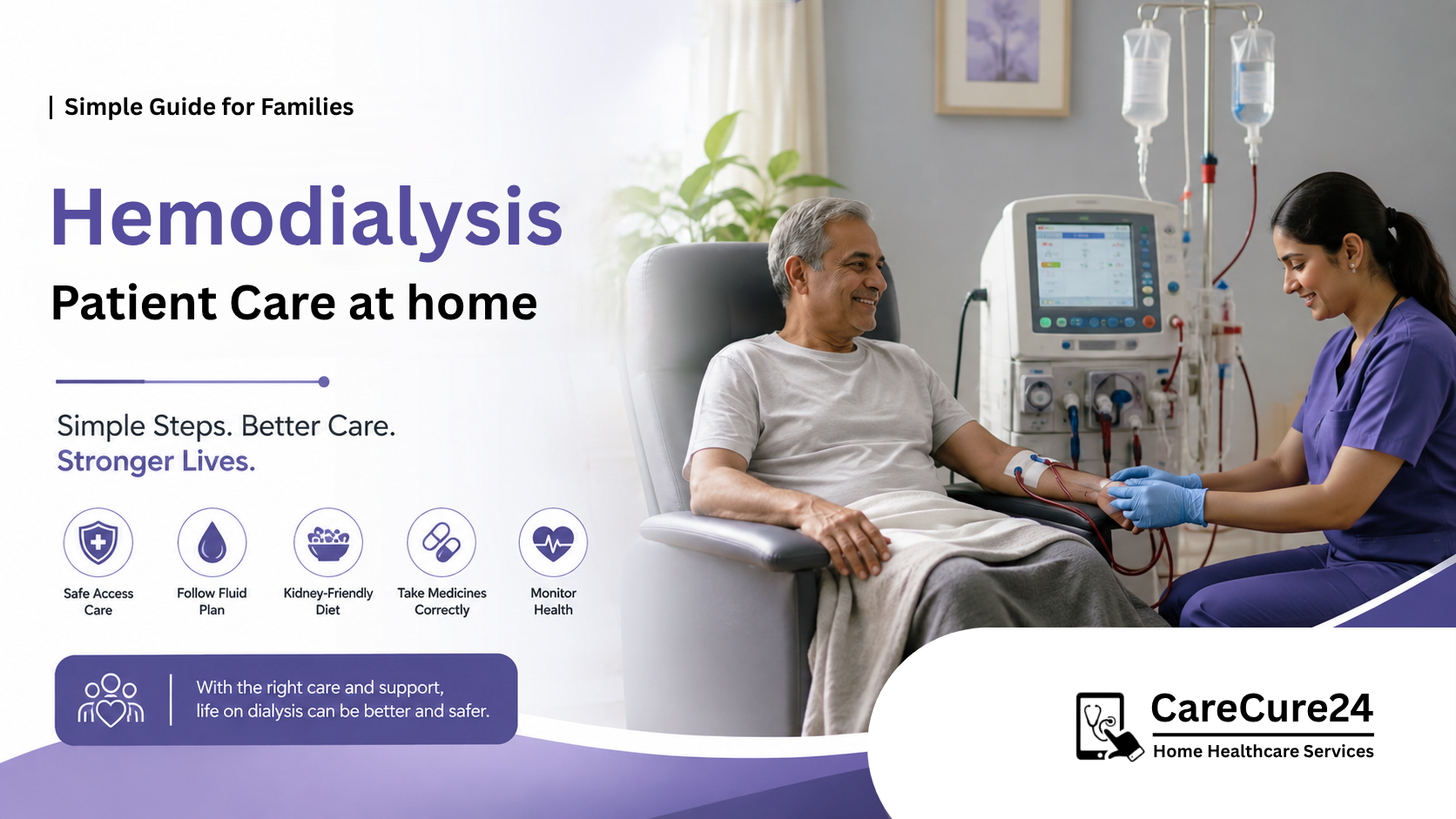
Hemodialysis patient care is a treatment that uses a dialysis machine to clean the blood. Blood passes through a special filter called a dialyzer. The machine removes waste and extra fluid, and then the cleaned blood returns to the body.
Some patients receive dialysis at a center, while others may receive home hemodialysis after proper training. Home treatment requires training from the dialysis team, and many programs also require a trained care partner.
1. Take Care of the Dialysis Access
The dialysis access is very important. It may be an AV fistula, AV graft, or catheter. This access allows blood to move between the patient and the dialysis machine.
For good hemodialysis care, keep the access area clean and check it every day.
- Wash the fistula or graft area as instructed by the dialysis team.
- Look for redness, swelling, warmth, pain, or discharge.
- Do not scratch or pick the skin around the access.
- Do not wear very tight clothes or jewellery over the access arm.
- Do not allow blood pressure checks or blood collection from the fistula arm unless the healthcare team advises otherwise.
- If the patient has a fistula or graft, check for the normal gentle vibration, often called a “thrill”.
- Keep a dialysis catheter clean, dry, and protected. Never open the catheter to the air unless specifically instructed by the healthcare team.
If the normal vibration suddenly disappears, contact the dialysis team quickly.
2. Prevent Infection
Infection prevention is one of the most important parts of hemodialysis care. Always wash your hands before helping the patient or touching dialysis equipment.
Keep the treatment area clean. Also, keep pets away from the dialysis access and supplies. During procedures where the access is open, follow the dialysis team’s instructions about masks and clean technique.
Watch for:
- Fever or chills
- Redness around the access
- Swelling or warmth
- Pain
- Pus or other drainage
- Feeling unusually unwell
These signs should be reported to the dialysis team without delay.
3. Follow the Fluid Plan
People on hemodialysis may produce less urine. As a result, extra fluid can build up in the body. This may cause swelling, high blood pressure, weight gain, or breathing difficulty.
Therefore, never decide the patient’s daily fluid limit by yourself. The doctor or renal dietitian should decide the correct amount based on the patient’s urine output, weight, dialysis schedule, and health condition.
Remember that fluid is not only water. Tea, coffee, juice, soup, ice cream, jelly and other foods that are liquid at room temperature may also count as fluid.
4. Follow a Kidney-Friendly Diet
Diet is another important part of hemodialysis care. The exact diet is different for every patient. However, many people on hemodialysis need to control salt, fluid, potassium and phosphorus while getting enough protein and calories.
Do not completely stop fruits, vegetables, milk, or other foods without professional advice. Potassium and phosphorus restrictions should be based on the patient’s blood test results and the advice of a renal dietitian.
Also, avoid taking herbal products or vitamin supplements without asking the doctor. Some supplements may be unsafe for people on dialysis.
5. Take Medicines Correctly
Dialysis patients may need several medicines. These can include medicines for blood pressure, anaemia, bone health, phosphorus control, or other conditions.
Keep a simple medicine schedule. Give medicines exactly as prescribed. Do not start, stop, or change a dose without speaking with the doctor.
It is also useful to keep a written record of medicines and take it to medical appointments.
6. Check Weight and Blood Pressure
Regular monitoring can help identify problems early. Follow the dialysis team’s instructions about checking:
- Body weight
- Blood pressure
- Pulse
- Temperature
- Access condition
A sudden increase in weight can mean that extra fluid is building up. Swelling or shortness of breath can also be warning signs.
7. Never Miss Dialysis Without Medical Advice
Dialysis removes waste and extra fluid from the body. Therefore, patients should follow their prescribed dialysis schedule.
If a treatment is missed or cannot be completed, contact the dialysis team. Do not simply wait until the next session.
For home hemodialysis, the patient and care partner should also know how to respond to machine alarms and what to do during an emergency. These skills should be learned during formal training from the dialysis team.
When Should You Seek Urgent Help?
Contact the dialysis team immediately if there is:
- Severe breathing difficulty
- Chest pain
- Fainting or severe weakness
- Fever or chills
- Heavy or uncontrolled bleeding
- Severe pain, redness, swelling, warmth, or discharge around the access
- Sudden loss of the fistula or graft vibration
- A serious problem with the dialysis machine or supplies
Final Thoughts
Good hemodialysis care does not mean only completing the dialysis treatment. It also means protecting the dialysis access, preventing infection, following the correct diet and fluid plan, taking medicines properly, checking health changes, and staying in contact with the dialysis team.
With regular care and the right support, families can help a dialysis patient stay safer and maintain a better quality of life at home. Always follow the patient’s own nephrologist, dialysis nurse, and renal dietitian because care needs can be different for each person.
Important: This article is for general education. It does not replace advice from a nephrologist, dialysis nurse, or renal dietitian.