

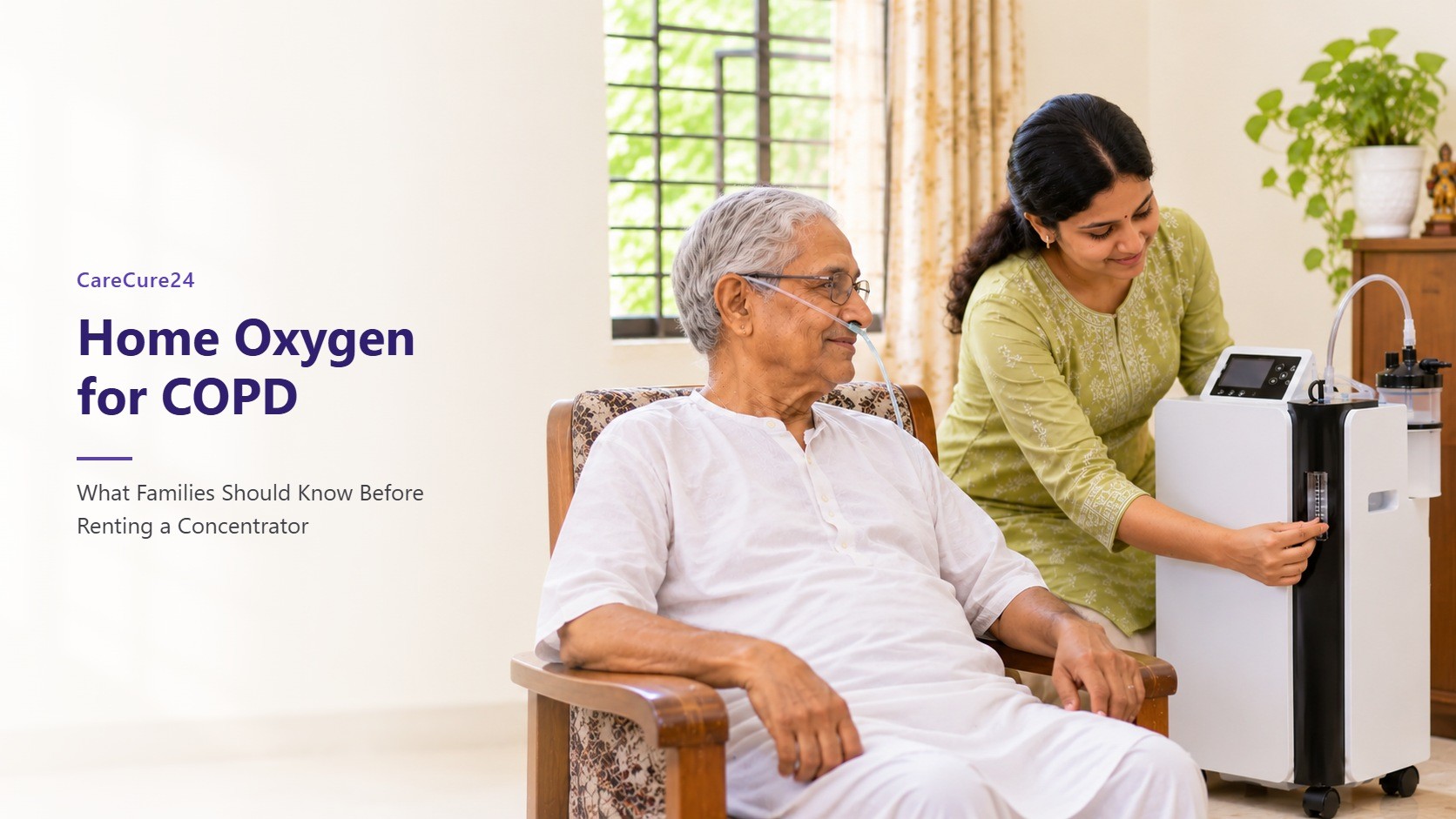
When a doctor tells a family that their elderly father or mother with COPD needs oxygen at home, the first reaction is often worry. Where do we get the machine? Which one is right? Is it safe to keep at home? How long will it be needed?
An oxygen concentrator on rent is the most common way families in our area arrange home oxygen for COPD. But renting the machine is only one part of it. Using it the right way, keeping the home safe and knowing when to call the doctor matter just as much.
In this guide, we explain in simple words what every family should know before renting an oxygen concentrator for a COPD patient.
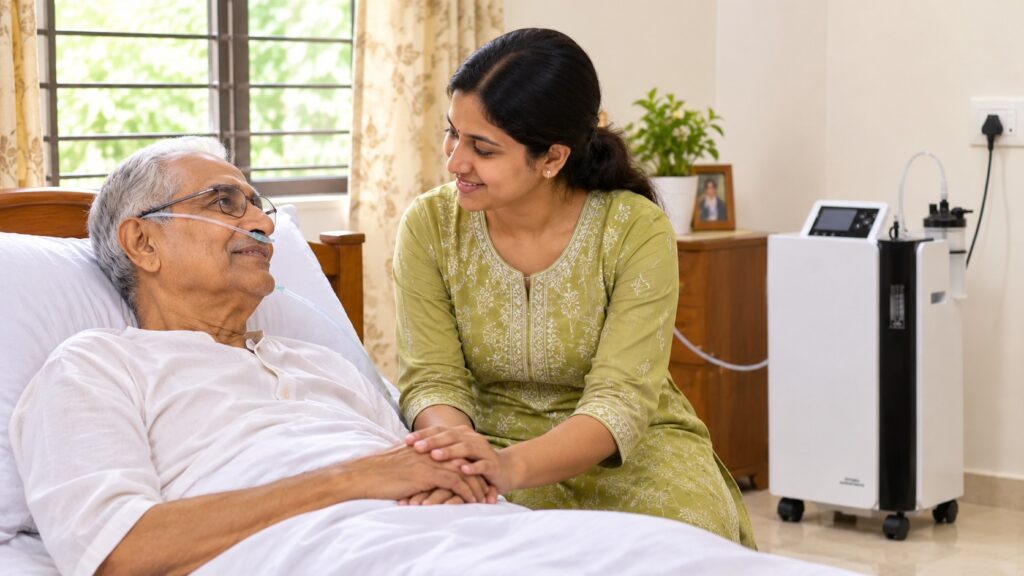
Why Do Some COPD Patients Need Oxygen at Home?
COPD (Chronic Obstructive Pulmonary Disease) is a long-term lung condition that makes breathing harder over time. Families usually notice breathlessness, a cough that does not go away and phlegm, especially in the mornings or during winter.
In some patients, especially when the disease becomes more severe, the lungs cannot keep enough oxygen in the blood. In such cases, the doctor may prescribe oxygen therapy at home. Before doing this, the doctor checks the patient’s blood oxygen level properly, often more than once. That is why the decision always comes from the doctor, not from the family or the equipment supplier.
Home oxygen does not cure COPD. It supports breathing and helps the body get the oxygen it needs. Inhalers, medicines and other treatments advised by the doctor must continue.
1. Always Start With a Doctor’s Prescription
Oxygen is a medicine. Just like tablets, the right amount and the right time are important. Never start oxygen at home only because the patient looks breathless or because a neighbour suggested it.
A proper oxygen prescription usually tells you:
- Flow rate: how many litres per minute (LPM) the patient should receive.
- Duration: how many hours a day, and whether oxygen is needed during sleep, at rest or while walking.
- Delivery method: nasal cannula or face mask.
- Target oxygen level: the oxygen saturation (SpO2) range the doctor wants you to maintain.
Important: Do not increase the flow on your own. For some COPD patients, more oxygen than prescribed can cause problems. If you feel the patient needs more, call the doctor first.
2. Understand the Oxygen Concentrator
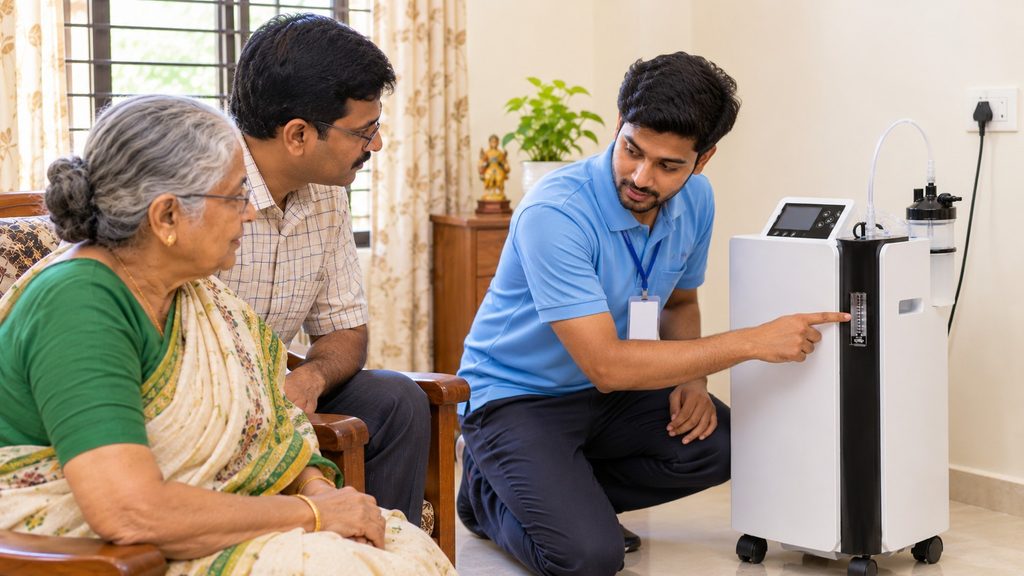
An oxygen concentrator takes air from the room, removes most of the nitrogen and gives oxygen-rich air to the patient through a tube. It runs on electricity, so it does not need refilling like a cylinder. You can read more in our earlier guide on Oxygen Concentrator Rental Service at Home.
For home use, concentrators commonly come in 5 LPM and 10 LPM capacity. The machine you rent must be able to give the flow rate written on the prescription. Most machines also have:
- A flow meter to set the litres per minute
- A humidifier bottle that adds moisture so the nose does not get too dry
- An air filter that needs regular cleaning
- On many models, an alarm for power failure or low oxygen purity
3. Questions to Ask Before You Rent
Not every rental service is the same. Before you finalise, ask these questions:
- Can this machine give the flow rate my doctor has prescribed?
- Is the machine cleaned and sanitised before it comes to my home?
- Will I get a new nasal cannula and tubing for my patient?
- Will someone deliver it, set it up and show my family how to use it?
- Whom do I call if the machine stops working or shows an alarm, and how quickly will you respond?
- What are the rental terms: daily, weekly or monthly, and is there a security deposit?
- Do you also provide a pulse oximeter, backup cylinder or BiPAP if the doctor advises it?
4. Keep the Home Safe Around Oxygen
Oxygen itself does not burn, but it makes fire burn much faster. A few simple habits keep the patient and the family safe.
- No smoking near the patient. No bidi, cigarette or lighter in the room.
- Keep the machine and tubing well away from open flames: gas stove, diya, candle, agarbatti and mosquito coil.
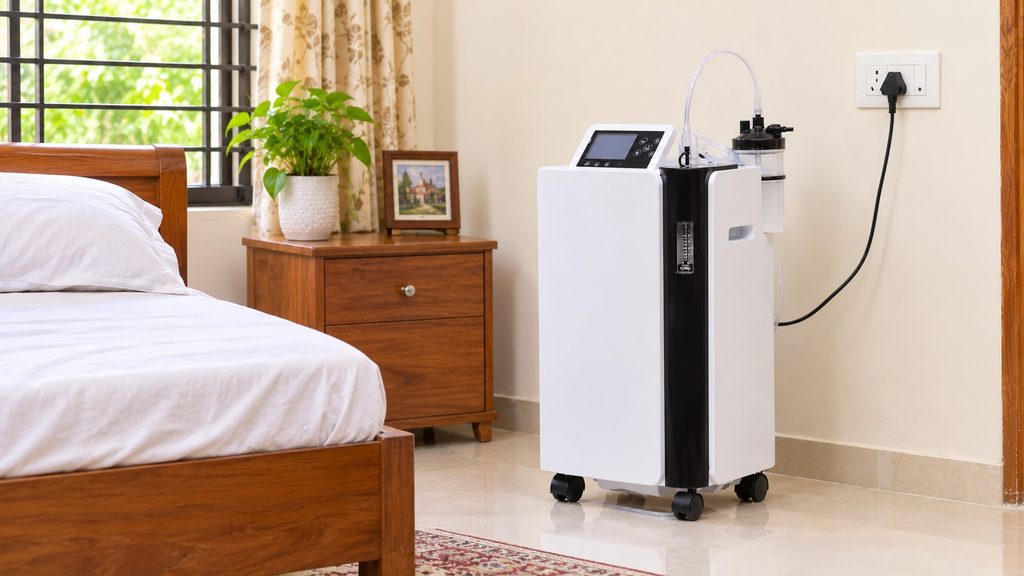
- Place the concentrator in an open, airy spot, not pressed against a wall, curtain or bed, so the air vents stay clear.
- Plug it directly into a proper earthed wall socket. Avoid extension boards and do not share the socket with other appliances.
- Do not use oil-based creams or petroleum jelly on the face or nose. Ask your doctor or pharmacist for a water-based product if the nose feels dry.
- Arrange the tubing so that nobody trips over it, especially elderly family members at night.
5. Plan Ahead for Power Cuts
A concentrator needs electricity. Power cuts are common in many areas, so think about this before the machine arrives.
- Ask the doctor whether the patient needs a backup oxygen cylinder for power cuts.
- If you plan to run the concentrator on an inverter, check with the rental provider whether your inverter can handle the machine’s load.
- Keep the rental provider’s and doctor’s phone numbers written near the machine.
6. A Simple Daily Routine for Families
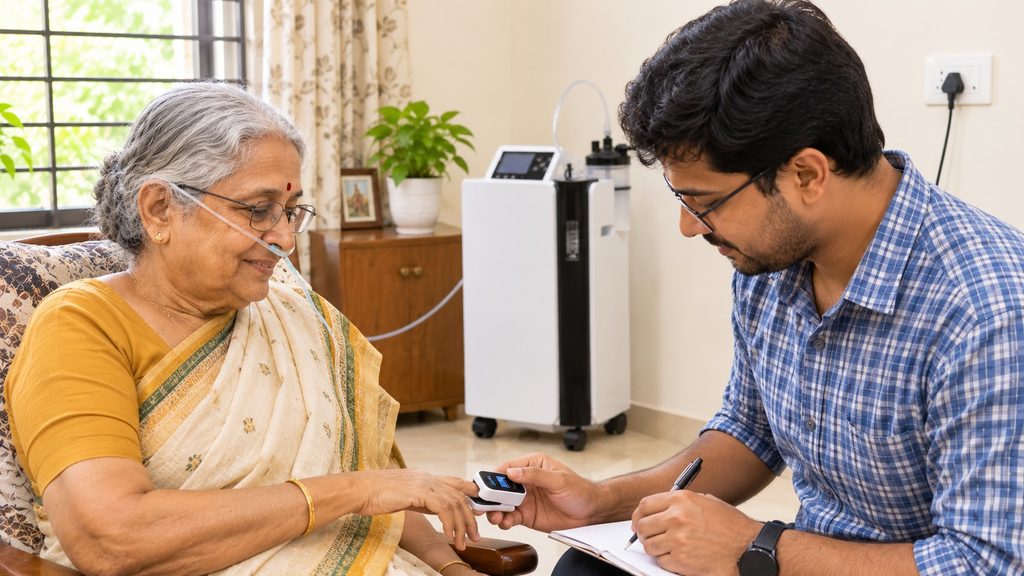
- Use oxygen for the hours and flow rate the doctor prescribed, not more and not less.
- If the doctor has asked you to, check the oxygen level with a pulse oximeter and write down the readings to show at the next visit.
- Fill the humidifier bottle only up to the marked level, using the water recommended by the provider (usually distilled or boiled and cooled water). Change the water daily.
- Keep the nasal cannula clean and replace it as advised. Check the skin behind the ears and inside the nose for soreness.
- Clean the air filter as per the machine’s instructions.
- Continue inhalers, medicines and follow-up visits. Oxygen is an added support, not a replacement for treatment.
7. When to Call the Doctor Immediately
Even with oxygen at home, a COPD patient’s condition can get worse. Contact the doctor or go to the nearest hospital without delay if you notice:
- Breathlessness getting worse even while on oxygen
- Oxygen readings staying below the target the doctor gave you
- Unusual drowsiness, confusion or difficulty waking up
- Bluish lips or fingertips
- Chest pain, high fever or a sudden change in phlegm colour
Winter can be a difficult time for many respiratory patients. Read more in our blog: Is Shortness of Breath in Winter Normal?
Frequently Asked Questions
Can we rent an oxygen concentrator without a prescription?
Oxygen should be used only on a doctor’s advice. The prescription tells you the correct flow rate and hours of use, which is needed to set up the machine safely.
Will the patient become addicted to oxygen?
No. Oxygen is not addictive. How long a patient needs it depends on their lung condition, and the doctor decides this through regular check-ups.
Is a concentrator or a cylinder better for COPD at home?
For regular daily use at home, a concentrator is usually more convenient because it does not need refilling. A cylinder can be useful as a backup during power cuts. Your doctor can tell you what suits your patient.
Can oxygen be used while sleeping?
Yes, if the doctor has prescribed it for sleep. Many COPD patients are advised to use oxygen at night. Follow the hours written on the prescription.
Conclusion
Home oxygen can make daily life easier and safer for a COPD patient when it is used the right way. Start with a doctor’s prescription, choose a rental service that delivers, sets up and supports the machine, keep the home fire-safe, plan for power cuts and know the warning signs. With these steps, families can care for their loved one at home with more confidence.
Disclaimer: This article is for general awareness only and is not a substitute for medical advice. Always follow the advice of the treating doctor.