

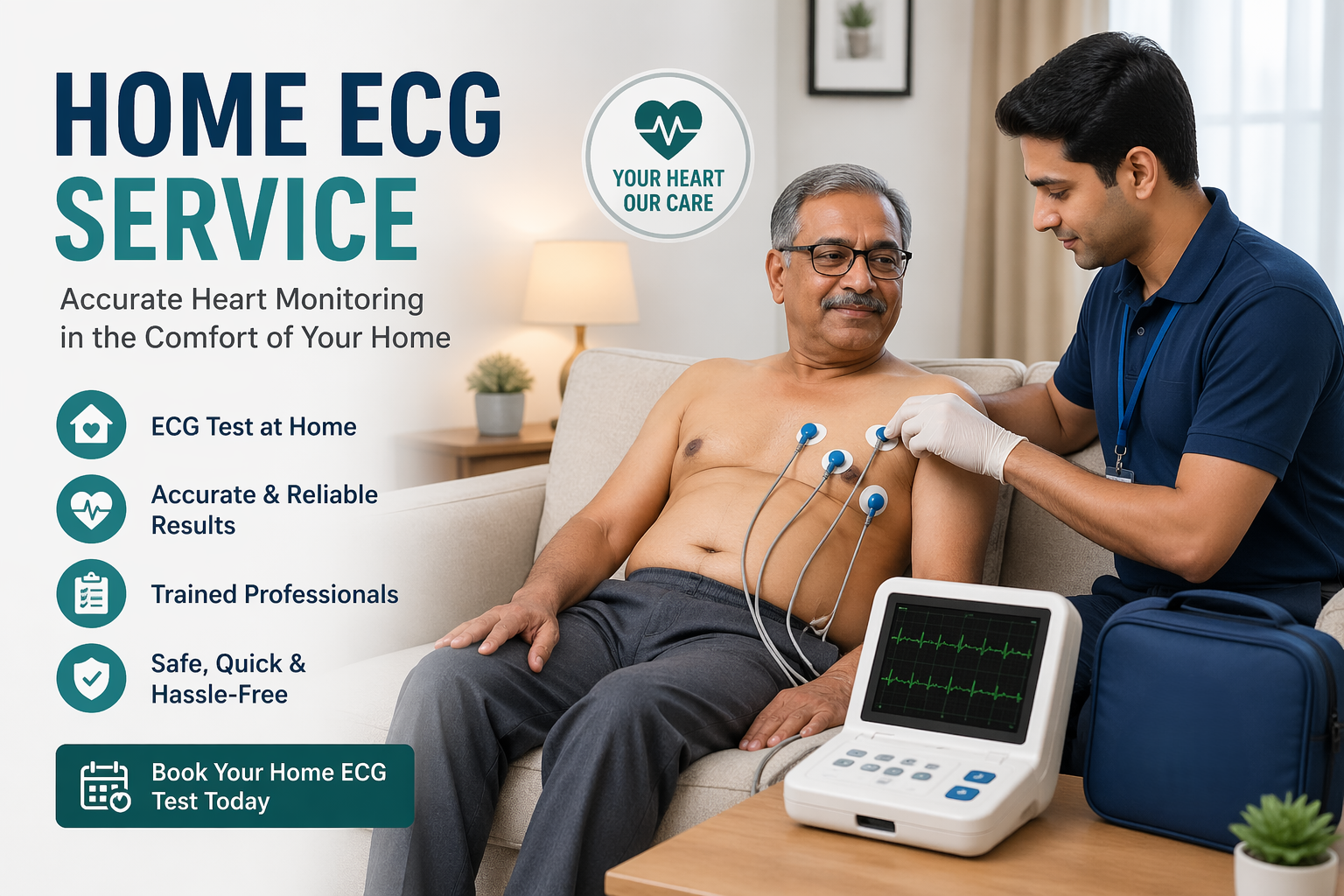
What is ECG Test?
An ECG test (Electrocardiogram) is a simple and quick medical test that checks the electrical activity of your heart. In other words, it shows how your heart beats and whether the rhythm is normal or not. During the test, small sticky pads called electrodes are placed on your chest, arms, or legs, and these sensors record your heart signals on a machine.
Today, due to advanced healthcare services, you can easily do an ECG test at home without visiting a hospital. This is very helpful for patients who need regular monitoring or cannot travel.
ECG Test at Home: Meaning and Importance
An ECG test at home is the same test done in hospitals, but it is performed in the comfort of your home by a trained technician or using a portable device. It is safe, painless, and takes only a few minutes.
Moreover, heart problems are increasing in India, so early detection is very important. Therefore, doing an ECG test regularly can help you stay safe and healthy.
Why is an ECG Test Done?
Doctors usually recommend an ECG test when there are signs of heart problems. However, it is also used for routine check-ups.
Common Reasons for ECG Test:
- Chest pain or discomfort
- Fast or irregular heartbeat (palpitations)
- Shortness of breath
- Dizziness or weakness
- History of heart disease
- After heart surgery or treatment
Additionally, an ECG test helps detect conditions like:
- Heart attack
- Arrhythmia (irregular heartbeat)
- Blocked arteries
- Heart muscle damage
Benefits of ECG Test at Home
Getting an ECG test at home offers many advantages, especially for elderly patients and busy individuals.
Key Benefits:
- Comfort: The patient can stay relaxed in their own bed or chair. There is no hospital environment, no noise, and no anxiety. This is very important for heart patients because stress can affect heart readings. A calm environment helps in getting more accurate results.
- No Travel or Waiting Time: With a home ECG test, you don’t need to travel or stand in long queues. A trained technician comes directly to your home with a portable ECG machine. This saves both time and energy.
- Quick Process: The ECG test is very fast. It usually takes only 5–10 minutes to complete. Small electrodes are placed on the chest, arms, and legs to record heart activity. The process is smooth and does not cause any discomfort.
- Safe and Painless: There are no injections, no cuts, and no side effects. It is suitable for all age groups, including children, adults, and elderly patients.
- Regular Monitoring: For patients with heart problems like arrhythmia, high blood pressure, or previous heart issues, regular monitoring is very important. A home ECG test makes it easy to check heart health frequently without visiting a hospital again and again.
- Fast Reports: Most home ECG services provide quick reports, often on the same day. Reports are usually shared digitally via WhatsApp or email, making it easy to consult doctors quickly.
In addition, home ECG services are very useful during emergencies or for patients with mobility issues.
How ECG Test at Home is Done (Step-by-Step)
It is especially helpful for elderly patients, busy individuals, or anyone who prefers medical care at home. The entire procedure is quick, painless, and usually completed within 10–15 minutes.
Step-by-Step Procedure:
- A trained healthcare technician visits your home at the scheduled time. They carry a portable ECG machine and all required equipment. These devices are modern, compact, and give accurate results just like hospital machines.
- You will be asked to lie down on a bed or a flat surface. It is important to stay calm and relaxed because stress or movement can affect the ECG readings. The technician may ask you to remove tight clothing or accessories from the chest area.
- After that, electrodes are placed on specific points of your chest, arms, and legs. These electrodes are connected to the ECG machine through wires. They do not cause any pain—only a slight cold feeling when applied.
- Once everything is set, the ECG machine starts recording the electrical signals of your heart. You will need to lie still and breathe normally for a few minutes. The machine captures the heart rhythm and displays it as a graph.
- Finally, the technician removes the electrodes. The ECG report is then generated either instantly or within a short time and shared with you via WhatsApp, email, or printed copy.
Importantly, the test is completely painless and does not take much time.
Preparation for ECG Test at Home
Although the ECG test is simple, some basic preparation helps to get accurate results.
Things to Do Before the Test:
- Avoid caffeine (tea, coffee) before the test
- Wear comfortable clothes
- Do not apply oil or cream to the chest
- Inform the technician about any heart device (like a pacemaker)
- Stay relaxed and calm
These small steps ensure better and more accurate ECG results.
Types of ECG Tests Available at Home
There are different types of ECG tests depending on your condition.
1. Resting ECG
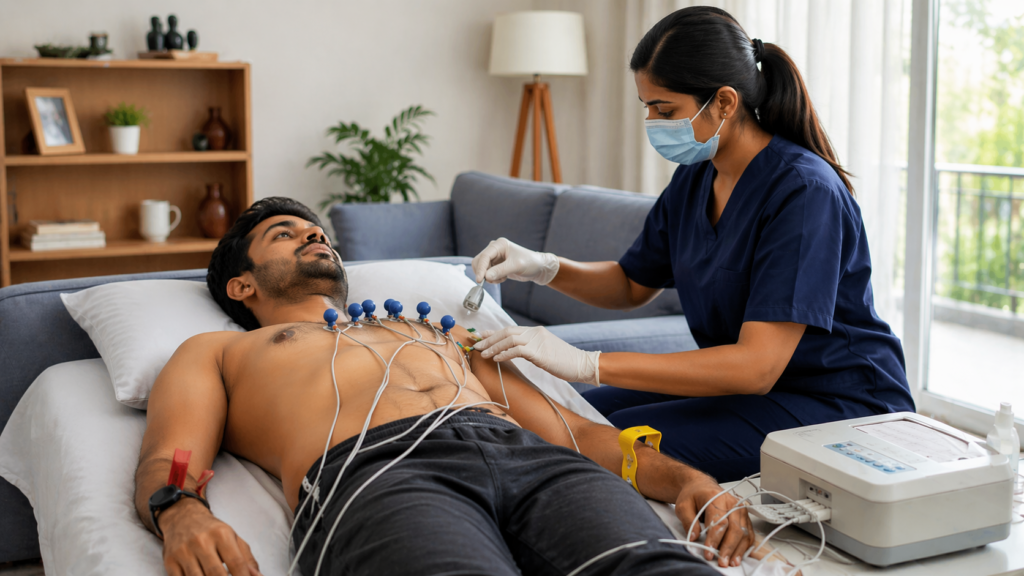
A resting ECG is the simplest and most widely used type of ECG test. In this test, the patient lies down calmly while small electrodes are placed on the chest, arms, and legs.
2. Holter Monitor
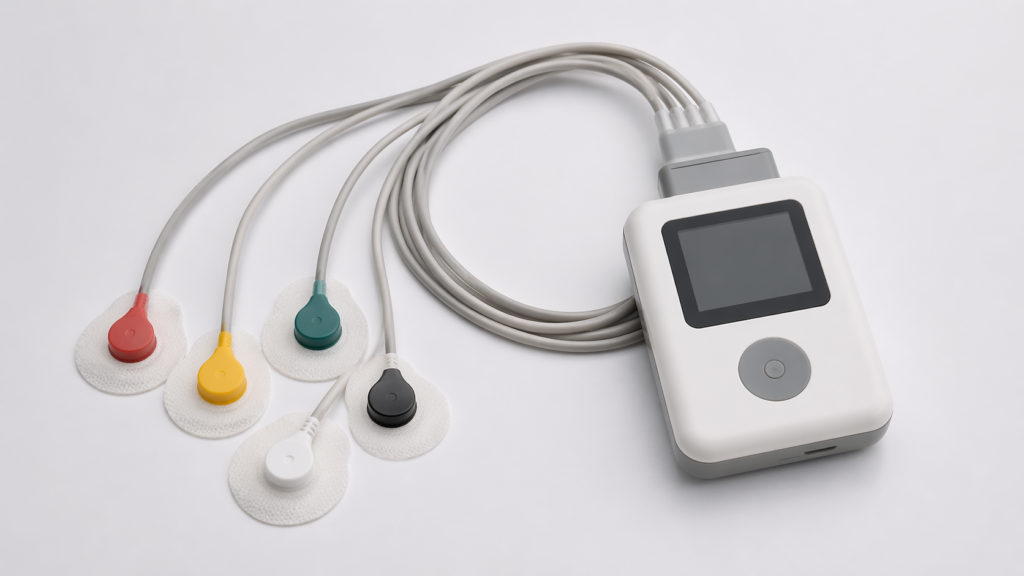
A Holter monitor is a portable ECG device that you wear for 24 to 48 hours (sometimes longer if required). It continuously records your heart activity throughout the day and night.
3. Event Monitor
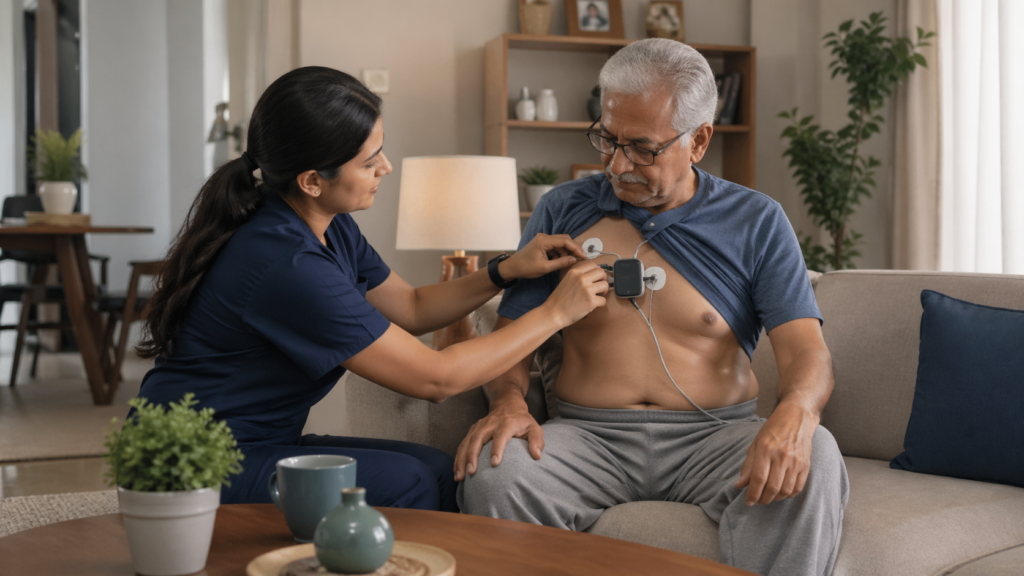
An event monitor is another portable ECG device, but it works differently from a Holter monitor. Instead of recording continuously, it records only when you feel symptoms.
This ECG test is useful when:
- Symptoms are rare or unpredictable
- You feel sudden dizziness, palpitations, or fainting
- Long-term monitoring is required
These options help doctors understand heart problems more clearly.
Who Should Take ECG Test at Home?
An ECG test at home is suitable for many people.
Recommended for:
- Elderly patients
- Heart disease patients
- People with high blood pressure or diabetes
- Patients recovering from surgery
- People with chest pain or breathing issues
- Busy individuals who prefer home services
Thus, it is useful for both patients and preventive health check-ups.
Are Home ECG Tests Reliable?
Yes, home ECG tests are reliable when done by trained professionals or certified devices. However, they are mainly used for monitoring and initial detection.
Still, if any abnormal result is found, you must consult a doctor immediately. Because sometimes, further tests may be required for confirmation.
ECG Test at Home vs Hospital ECG
| Feature | ECG Test at Home | Hospital ECG |
|---|---|---|
| Comfort | High | Low |
| Travel Needed | No | Yes |
| Waiting Time | No waiting | Long waiting |
| Cost | Affordable | Sometimes higher |
| Accuracy | Same (if done properly) | High |
Therefore, home ECG testing is becoming more popular due to convenience.
Cost of ECG Test at Home in India
The cost of an ECG test at home is usually affordable.
Average Price:
- ₹200 to ₹800 (depending on city and service provider)
Prices may vary based on location, urgency, and additional services.
When to Consult a Doctor Immediately?
Even after an ECG test at home, you should seek medical help if you have:
- Severe chest pain
- Sudden breathlessness
- Continuous dizziness
- Very fast or slow heartbeat
Because early treatment can save lives.
Final Thoughts
An ECG test at home is a simple, safe, and effective way to check your heart health without visiting a hospital. Moreover, it saves time, reduces stress, and provides quick results.
However, while it is a powerful tool for early detection, it should not replace a doctor’s consultation. Therefore, always follow your doctor’s advice after the test.
In conclusion, regular ECG testing, especially at home, can help you detect heart problems early and live a healthier life.