

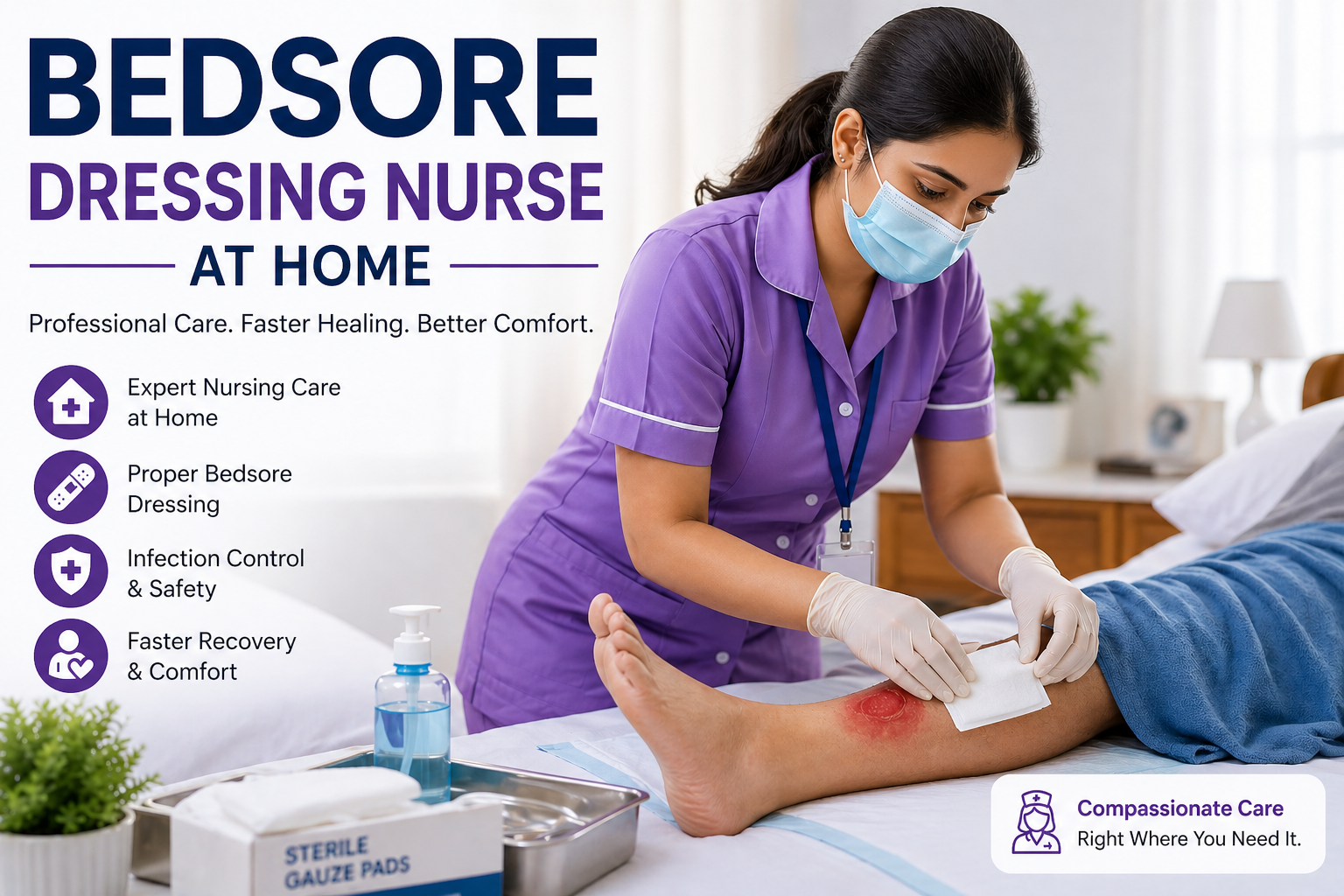
When a person stays in bed for a long time, the skin can develop painful wounds called bedsores. These wounds need proper bedsore dressing to reduce pain, control infection, and support healing. A trained nurse can provide safe care at home and help the patient feel more comfortable.
Home nursing for bedsore wounds is now a trusted service because many families want treatment in a familiar place. A professional nurse can assess the wound, clean it, apply the correct dressing, and monitor healing without hospital visits.
What Is a Bedsore?
A bedsore is a skin wound that develops when one part of the body stays under pressure for a long time. It is also known as a pressure sore or pressure ulcer. This problem usually happens when a person cannot move without help and remains in the same position for many hours.
Continuous pressure reduces blood flow to the skin and the tissue under it. As a result, the skin becomes damaged and slowly starts to break down.
Bedsores often appear on areas where the bone is close to the skin. Common places include the back, hips, heels, ankles, elbows, and tailbone. At first, the skin may look red or dark and feel warm. Later, the area can become painful and open into a deeper wound that needs proper bedsore dressing to protect the skin and support healing.
People with low movement have a higher risk of developing these wounds. Common causes include:
- Long bed rest
- Poor nutrition
- Wet skin
- Diabetes
- Weak blood circulation
When the body does not get enough nutrients, the skin becomes weaker and heals more slowly. Wet skin from sweat or urine can also damage the outer skin layer. In the same way, diabetes and poor blood flow can reduce the body’s natural healing process.
Doctors recommend quick treatment because untreated bedsores can become serious. Without proper care, the wound may grow deeper, become infected, and cause severe health problems.
Early bedsore dressing and regular monitoring can help prevent complications and improve recovery.
Why Bedsore Dressing Is Important
Proper bedsore dressing protects the wound from outside bacteria and keeps the area moist for better healing. It also helps:
- Reduce pain
- Prevent bad smell
- Stop infection
- Protect nearby skin
- Improve recovery time
Different wounds need different dressings. A nurse chooses the best one after checking the wound stage.
Types of Bedsore Dressings
The right bedsore dressing depends on the size, depth, and condition of the wound. A trained home nurse checks the sore carefully before choosing the best material. Because every wound is different, one dressing may work well for one patient but may not be suitable for another.
Foam Dressing
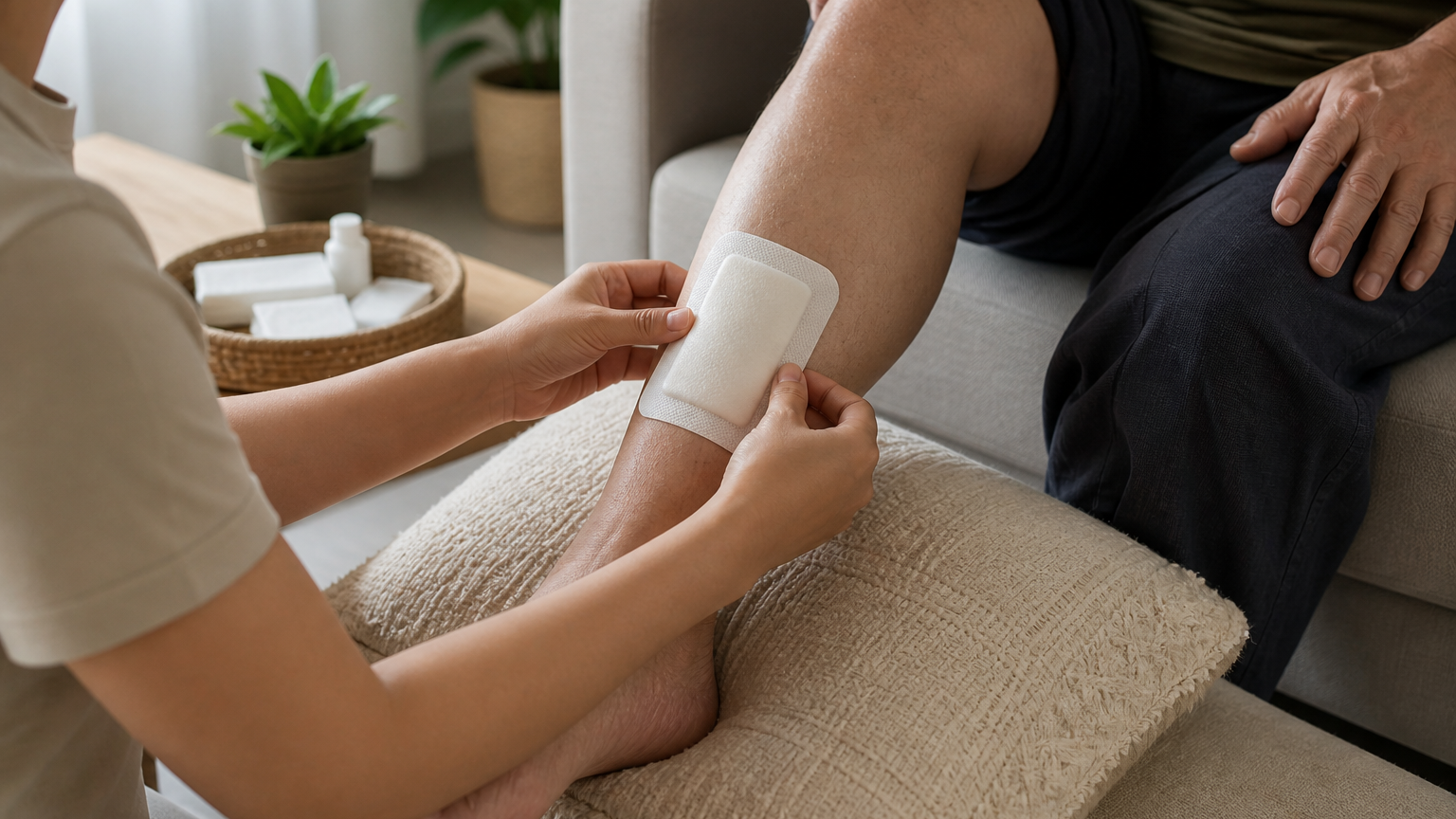
Foam dressing is commonly used for bedsores that produce mild to moderate fluid. This soft dressing absorbs extra moisture while keeping the wound surface clean. It also protects the skin from friction and works well for patients with delicate or sensitive skin. Many nurses prefer foam bedsore dressing because it gives comfort and reduces skin damage during dressing changes.
Hydrocolloid Dressing
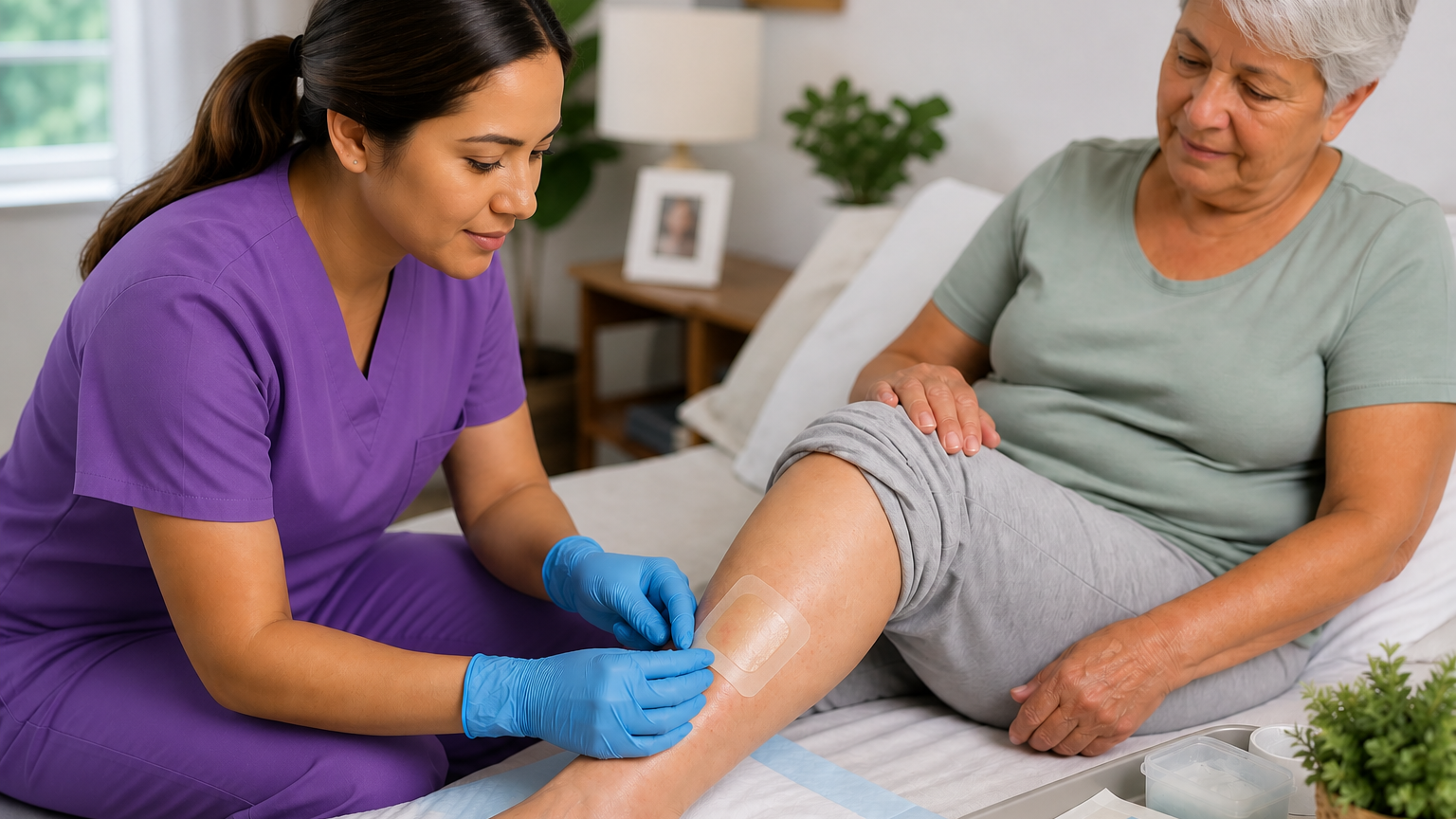
Hydrocolloid dressing creates a moist environment that supports natural healing. It forms a protective layer over the wound and helps prevent outside bacteria from entering.
This type of bedsore dressing is often used for shallow wounds with little drainage. It can stay in place for several days, which means the wound is disturbed less often. As a result, the patient may feel less pain during treatment.
Alginate Dressing
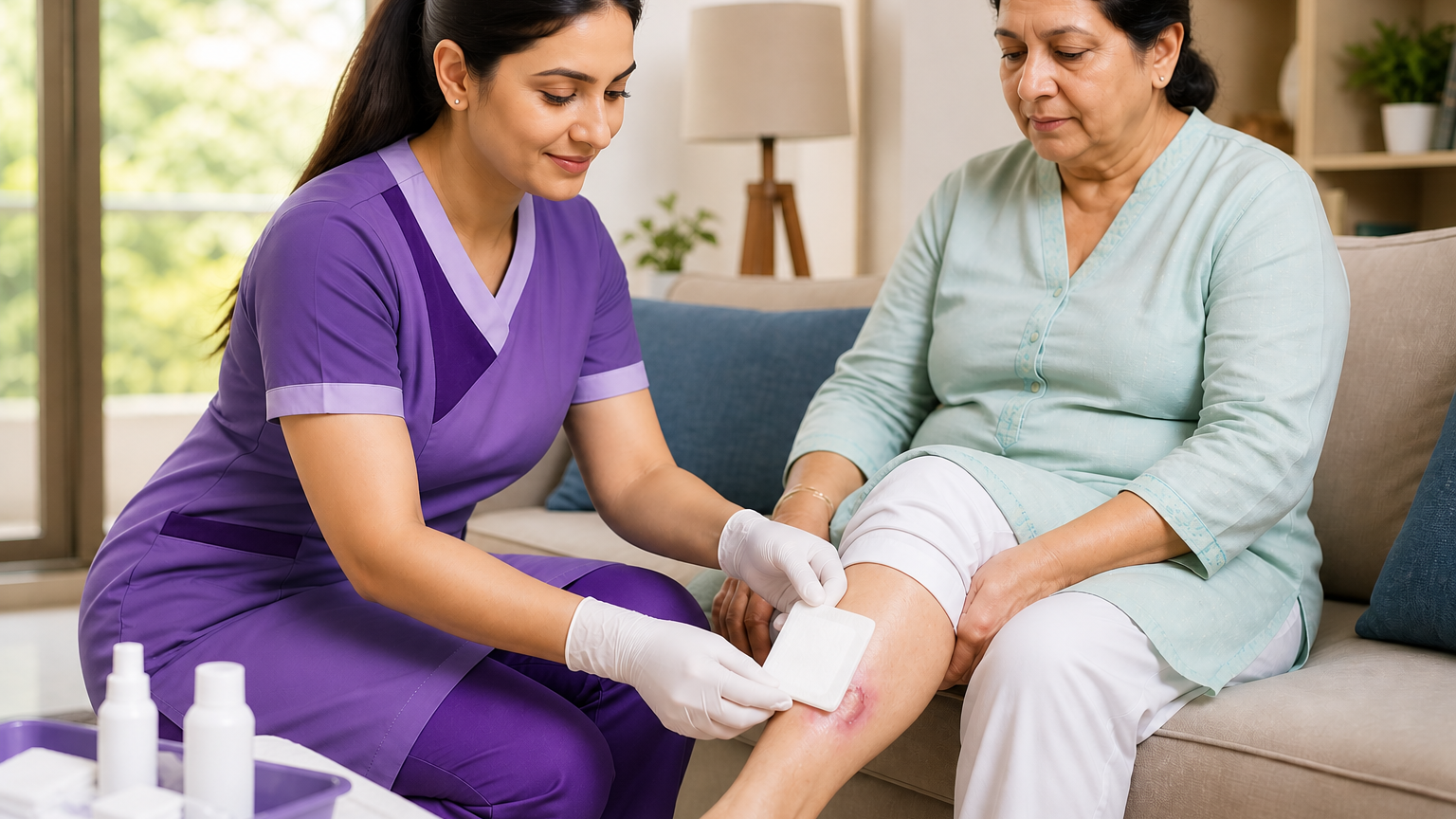
Alginate dressing is made from natural seaweed fibres and is useful for wounds with heavy drainage. When the dressing touches wound fluid, it turns into a soft gel. This helps keep the wound moist while absorbing excess liquid.
This dressing for deeper pressure ulcers because it lowers the risk of skin breakdown around the wound.
Antimicrobial Dressing
Antimicrobial dressing contains special agents that help control bacteria inside the wound. It is often used when there is a higher risk of infection. Some dressings contain silver or other protective ingredients that slow bacterial growth.
This type of bedsore dressing can be very helpful for patients whose wounds heal slowly.
NPWT Dressing
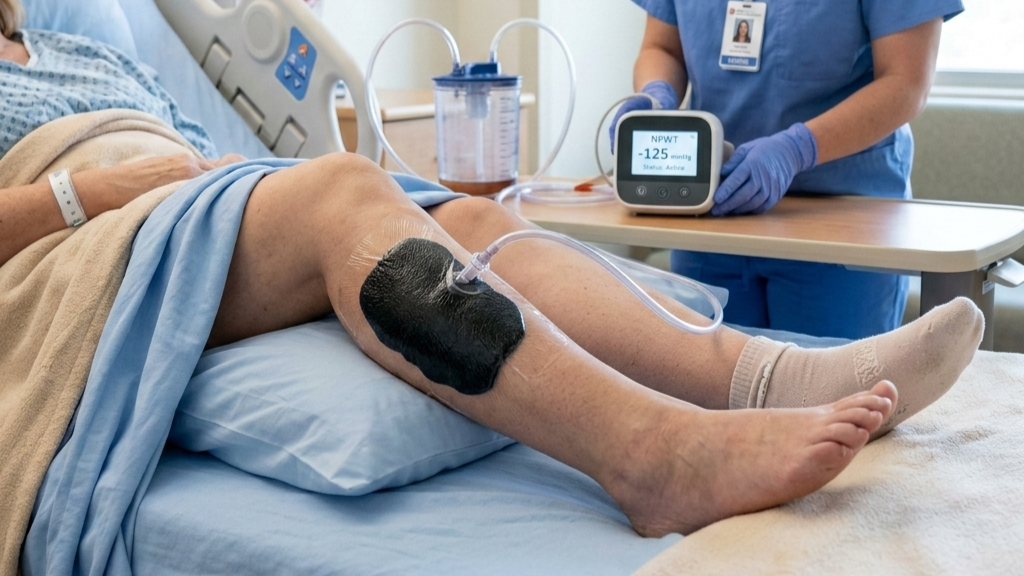
NPWT stands for Negative Pressure Wound Therapy. This advanced bedsore dressing uses a special foam or gauze dressing connected to a small suction machine. The machine creates gentle negative pressure over the wound. This suction removes extra fluid, reduces swelling, and improves blood flow in the damaged tissue. It also helps pull the wound edges closer together.
How a Nurse Performs Bedsore Dressing at Home
A professional nurse follows careful steps during bedsore dressing:
1. Wound Assessment
Before starting the bedsore dressing, the nurse carefully examines the wound. This first step helps the nurse understand the condition of the skin and choose the right treatment. The nurse usually checks:
- Wound size
- Depth
- Color
- Smell
- Signs of infection
2. Cleaning the Wound
After checking the sore, the nurse gently cleans the wound. Cleaning is a very important part of bedsore dressing because it removes dirt, fluid, and harmful bacteria. Most nurses use sterile saline solution because it is gentle on damaged skin.
3. Removing Old Tissue
Sometimes, dead tissue develops inside the wound. This tissue can slow healing and increase infection risk. During bedsore dressing, the nurse checks whether the wound needs the removal of damaged tissue.
4. Applying New Dressing
Once the wound is clean, the nurse applies a fresh dressing. The right dressing protects the wound and keeps the healing area moist.
5. Pressure Relief
After the bedsore dressing is complete, the nurse helps reduce pressure on the affected area. Constant pressure is one of the main causes of bedsores, so pressure relief is very important.
Benefits of Hiring a Bedsore Dressing Nurse at Home
Choosing a professional nurse for bedsore dressing at home is a good decision. Many families now prefer home nursing because it gives safe medical care without moving the patient to a clinic or hospital.
Professional Care
A trained nurse has the knowledge to provide safe bedsore dressing for different wound care and infection control. The nurse checks the wound carefully, cleans the affected area, and applies the right dressing material.
Better Comfort for the Patient
Many patients feel less stress when they receive treatment at home. Familiar surroundings often help the patient stay calm during bedsore dressing. For elderly or bedridden people, avoiding hospital travel can reduce pain and discomfort.
Faster Healing
Regular bedsore dressing by a skilled nurse can support faster healing. The nurse follows a proper schedule for dressing changes and wound cleaning. This keeps the wound clean and moist, which is important for tissue repair.
Lower Hospital Visits
Frequent hospital visits can be difficult for both patients and family members. Home nursing reduces the need for repeated clinic visits for bedsore dressing. This can save travel costs, waiting time, and physical strain.
Family Guidance
The nurse can teach family members how to protect the skin between each bedsore dressing visit. Families can learn how to change the patient’s position, keep the skin dry, and watch for signs of infection.
Signs You Need Immediate Nursing Help
Contact a nurse quickly if you notice:
- Bad smell from the wound
- Redness around the skin
- Fever
- Increased pain
- Yellow discharge
- Black tissue
These may be signs of infection.
Tips to Prevent New Bedsores
Preventing new pressure wounds is just as important as proper bedsore dressing. A trained nurse often teaches family members simple ways to protect the skin at home.
- Change position every 2 hours – Staying in one position for a long time puts pressure on the same part of the body. This pressure reduces blood flow and can damage the skin. For this reason, patients should be turned or moved at least every two hours.
- Keep skin dry – Wet skin becomes weak and can break easily. Sweat, urine, or moisture can increase skin damage. Therefore, the skin should be cleaned gently and dried well.
- Use air mattress – Air mattress can reduce pressure on bony areas such as the back, hips, and heels. It spreads body weight more evenly and gives extra support.
- Give healthy food – Healthy food helps the body repair damaged skin. Protein, vitamins, and minerals support faster healing. Foods like eggs, fish, milk, fruits, and vegetables can improve skin health and reduce the risk of new sores.
- Increase water intake – Water keeps the skin soft and healthy. Dry skin can crack more easily. Patients should drink enough fluids each day unless a doctor gives other advice
Who Needs Bedsore Dressing at Home?
This service is useful for:
- Elderly patients
- Stroke patients
- Paralysis patients
- Cancer patients
- Bedridden patients
- Post-surgery patients
These people often need regular wound monitoring.
Bedsore Dressing Nurse Cost
The cost of bedsore dressing nursing at home can change depending on the patient’s condition and the type of wound care needed. Some small wounds need simple cleaning and dressing, while deeper pressure sores may need advanced treatment with special medical materials. Because of this, the final price usually depends on the stage of the bedsore and how often the dressing must be changed.
In most cases, the bedsore dressing service cost may include wound cleaning, sterile dressing materials, infection control, and professional monitoring by a trained nurse. If the wound needs daily care, the total monthly cost can be higher than a single-visit service. However, many families choose home nursing because it reduces hospital travel and gives comfort to the patient.
Several factors can affect the nursing charge, such as:
- Size and depth of the wound
- Type of dressing used
- Number of nursing visits
- Patient’s overall health condition
- Risk of infection
- Duration of treatment
A professional nurse can first examine the wound and then explain the expected care plan. This helps families understand the treatment process and the estimated bedsore dressing nursing cost before starting the service.
Although home nursing may seem like an extra expense, proper wound care can help prevent serious infection, reduce pain, and support faster healing. Early treatment often lowers long-term medical costs and protects the patient from further complications.