

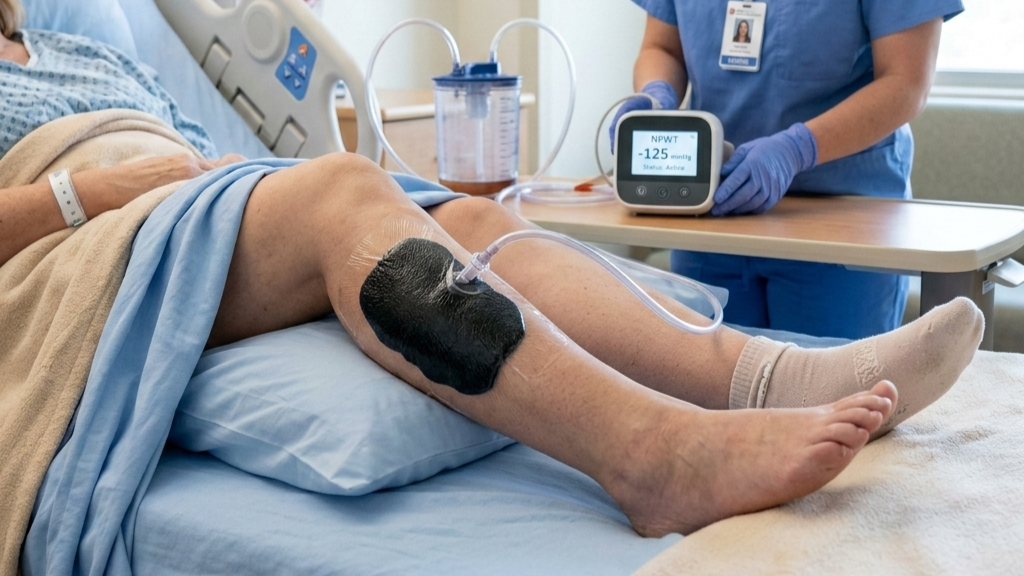
Wound care is an important part of healthcare. If a wound does not heal properly, it can cause infection, pain, and serious health problems. In many cases, traditional dressings are not enough for deep or chronic wounds. Therefore, doctors use advanced methods like NPWT dressing to improve healing.
NPWT dressing stands for Negative Pressure Wound Therapy dressing. It is also called VAC dressing (Vacuum-Assisted Closure). This treatment uses controlled suction to remove fluid from the wound and help it heal faster.
Today, NPWT dressing is widely used in hospitals and even at home under medical supervision. It is especially helpful for wounds caused by surgery, diabetes, burns, pressure sores, and injuries.
In this article, you will know about NPWT dressing deeply.
What is NPWT Dressing?
NPWT dressing is a modern wound treatment that uses a vacuum device to help wounds heal faster.
In this method, a special dressing is placed on the wound and connected to a suction pump. The pump creates negative pressure (vacuum) that removes extra fluid and improves blood flow in the wound area.
Because of this suction effect, the wound becomes cleaner and healthier. New tissue begins to grow, and the wound gradually closes.
NPWT dressing is commonly used for:
- Diabetic foot ulcers
- Pressure sores (bed sores)
- Surgical wounds
- Burn injuries
- Traumatic wounds
- Skin graft wounds
These wounds often take a long time to heal, so NPWT dressing can be very useful.
What Does NPWT Stand For?
NPWT (Negative Pressure Wound Therapy) is a modern medical treatment used to help wounds heal faster and more safely.
Let us understand these steps.
Negative Pressure:
The word negative pressure means suction or vacuum pressure. In simple terms, it is the same type of suction used in a vacuum cleaner, but in medical treatment, it is very controlled and gentle.
This suction pulls out unwanted fluid, bacteria, and dead tissue from the wound. As a result, the wound area becomes cleaner and healthier. In addition, removing excess fluid reduces swelling and helps the wound environment stay dry and protected.
Because of this controlled suction, the wound gets the right conditions to heal properly.
Wound Therapy:
Wound therapy simply means medical treatment that helps a wound heal. Wounds can happen due to surgery, accidents, burns, infections, diabetes, or long-term pressure on the skin.
Normally, wounds heal with basic dressings such as gauze and bandages. However, some wounds become chronic wounds, which means they take a long time to heal or do not heal easily. These wounds may also develop infection or tissue damage.
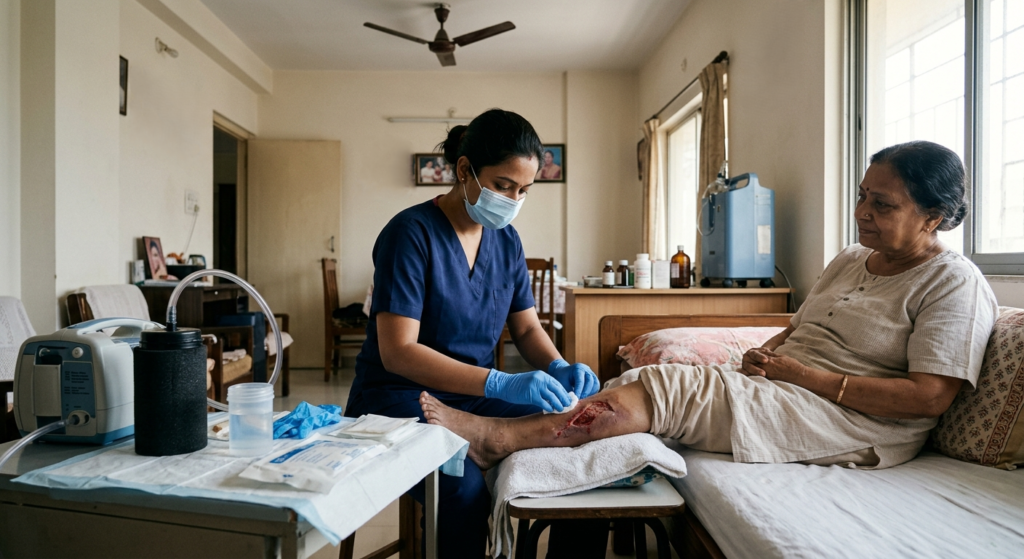
This technology started becoming popular in the 1990s and is now widely used in modern wound care.
How NPWT Dressing Works
NPWT dressing works through a simple but highly effective healing process. The therapy uses controlled suction to create the best environment for wound healing. As a result, the wound stays clean, moist, and protected from infection.
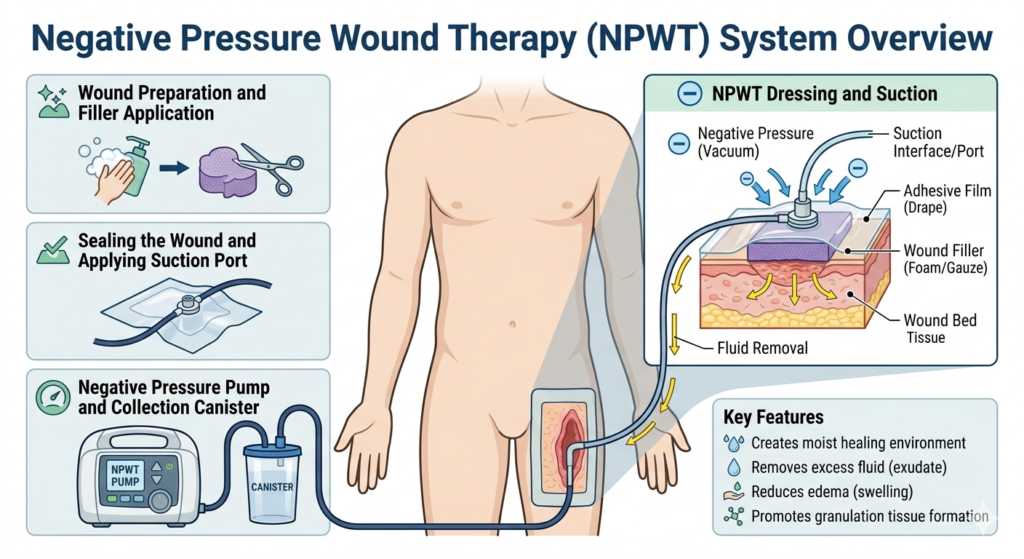
First, a trained nurse or doctor cleans the wound carefully. Cleaning is very important because it removes dirt, bacteria, and dead tissue that can slow down healing. After cleaning, the healthcare professional places a special foam or gauze dressing inside or over the wound. This material helps spread the suction pressure evenly across the wound surface.
Next, the nurse covers the wound with a transparent adhesive film. This film seals the wound completely and makes it airtight. Because the wound is sealed, the vacuum system can create controlled negative pressure inside the dressing.
After sealing the wound, a soft tube is attached to the dressing. This tube connects the dressing to a vacuum pump machine. When the machine starts, it creates gentle suction, also called negative pressure.
This suction plays an important role in wound healing and helps the wound in several ways.
Removes Wound Fluid
The vacuum pump removes extra fluid, pus, and exudate from the wound. When fluid collects inside a wound, it creates a good environment for bacteria to grow. However, NPWT dressing continuously pulls out this fluid and keeps the wound clean.
Because of this, the risk of infection becomes lower. At the same time, the wound environment becomes healthier for healing.
Improves Blood Circulation
Negative pressure improves blood flow around the wound area. Good blood circulation is very important for healing because blood carries oxygen and nutrients to damaged tissues.
When blood flow increases, the body can repair the wound more effectively. As a result, the healing process becomes faster.
Pulls Wound Edges Together
Another important benefit of NPWT dressing is that it gently pulls the wound edges closer together. This process is called wound contraction.
When the wound edges move closer, the size of the wound becomes smaller. Because of this, the body needs less time to close the wound.
Promotes New Tissue Growth
NPWT dressing also stimulates the formation of granulation tissue. Granulation tissue is the new healthy tissue that grows during wound healing.
This tissue fills the wound from the inside and helps create a strong foundation for new skin to grow. Therefore, the wound heals more effectively and safely.
Protects the Wound from Outside Infection
The sealed dressing also protects the wound from outside bacteria and contamination. Since the wound remains covered and airtight, germs from the environment cannot easily enter the wound.
This protection reduces infection risk and supports safe healing.
Maintains a Moist Healing Environment
Healthy wounds heal faster when they stay slightly moist. NPWT dressing helps maintain the correct moisture level inside the wound. It removes extra fluid but still keeps the wound environment balanced.
Because of this, the body can repair damaged tissue more efficiently.
Continuous Healing Support
The vacuum pump works continuously or in controlled cycles, depending on the treatment plan. This constant suction keeps removing fluid, improving circulation, and stimulating tissue growth throughout the therapy.
Over time, these effects work together to speed up wound healing and improve recovery.
For this reason, NPWT dressing has become one of the most advanced and effective treatments for difficult wounds.
Components of NPWT Dressing
An NPWT dressing system has several important parts. Each part works together to create a closed vacuum system that helps the wound heal faster and stay protected.
Foam or Gauze Dressing
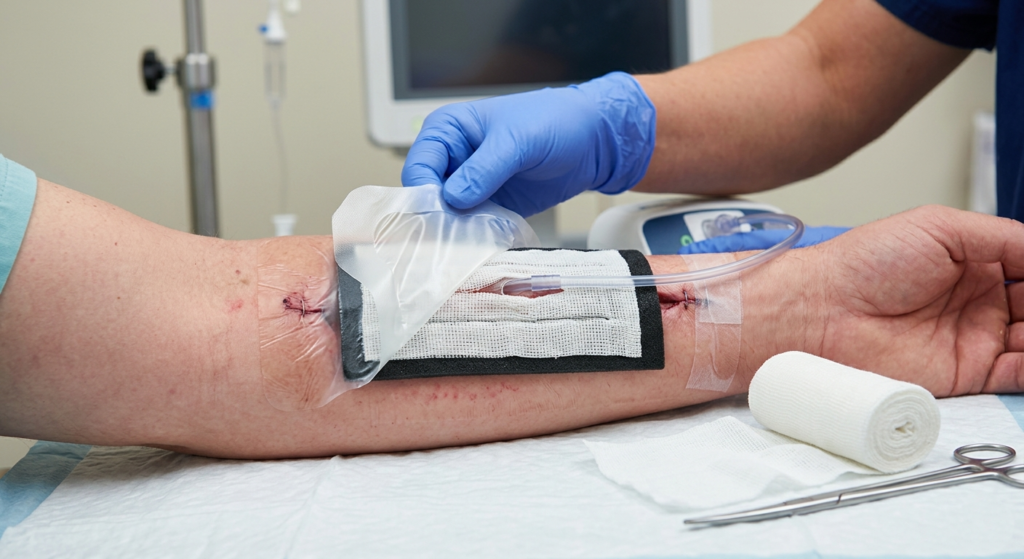
The foam or gauze dressing is placed directly inside the wound. It fills the empty wound space and touches the wound surface. This material helps spread the negative pressure evenly across the wound area. It also allows wound fluid to pass through the dressing so the suction machine can remove it easily.
Transparent Adhesive Film
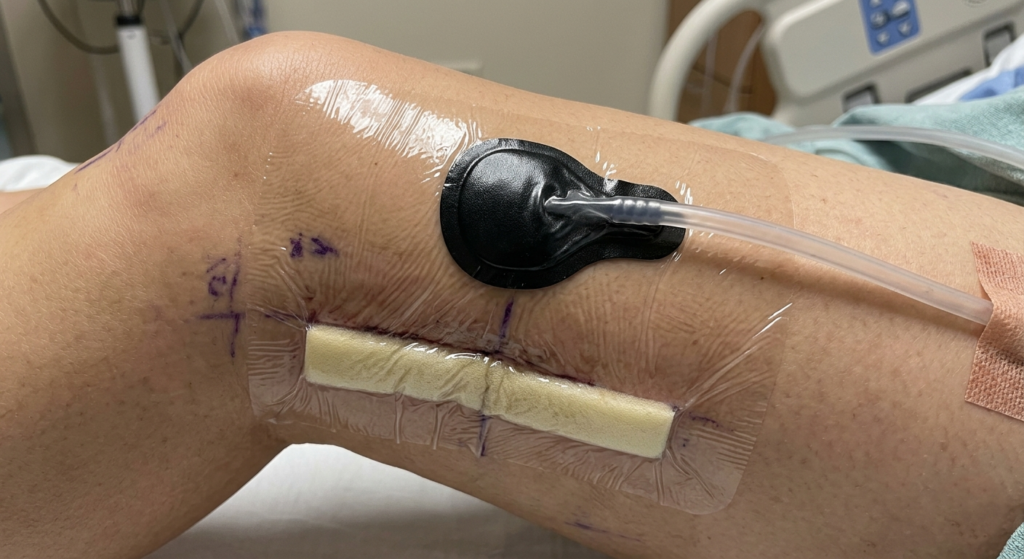
A transparent adhesive film is placed over the dressing and the surrounding skin. This film seals the wound and creates an airtight environment. Because of this seal, the vacuum pressure can work properly. In addition, the film protects the wound from outside bacteria and contamination.
Drainage Tube & Vacuum Pump
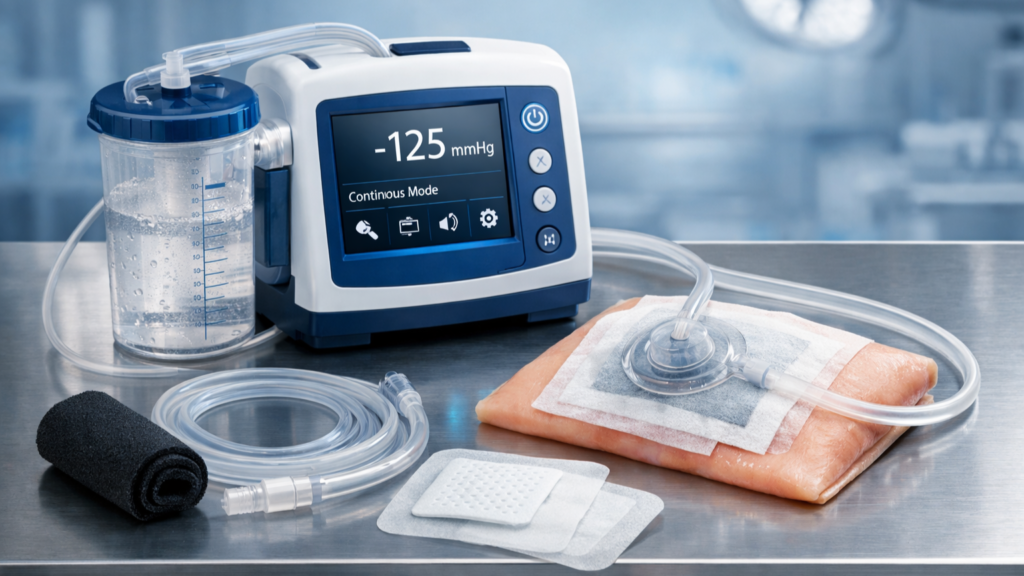
The drainage tube connects the dressing to the suction device. This flexible tube carries wound fluid from the dressing to the machine. It also helps deliver the negative pressure from the pump to the wound area.
The vacuum pump is the main device in NPWT therapy. It creates controlled negative pressure or suction. This suction removes fluid, infection, and debris from the wound. At the same time, the pump helps improve blood flow and supports the growth of new tissue.
Collection Canister
The collection canister stores the fluid that is removed from the wound. All wound drainage flows through the tube into this container. Healthcare providers can check the canister to monitor how much fluid comes from the wound. This helps them understand the wound healing progress.
Types of Wounds Treated with NPWT Dressing
Doctors use NPWT dressing for many types of wounds, especially wounds that heal slowly or have a high risk of infection.
These are some common wounds where NPWT dressing is helpful.
Diabetic Foot Ulcers:
People with diabetes often develop wounds on their feet called diabetic foot ulcers. These wounds heal slowly because diabetes affects blood circulation and nerve function.
Pressure Ulcers (Bed Sores):
Pressure ulcers, also called bed sores, usually occur in patients who stay in bed for a long time. Continuous pressure on the skin reduces blood flow and damages the tissue.
Surgical Wounds:
Sometimes a wound from surgery may reopen or become infected. Doctors call this surgical wound dehiscence. These wounds can be difficult to treat with a normal dressing.
Burns:
Some burn injuries damage the skin deeply and take a long time to heal. NPWT dressing may be used for selected burn wounds, especially when doctors want to prepare the wound for skin grafting.
Traumatic Injuries:
Accidents can cause traumatic wounds, such as deep cuts, open fractures, or crush injuries. These wounds are often large and may easily become infected.
Procedure steps of NPWT Dressing
The NPWT dressing procedure is usually done by a trained nurse or doctor in a hospital, clinic, or sometimes at home care.
Below are the simple step-by-step procedures.
Step 1: Cleaning the wound
First, the healthcare professional cleans the wound carefully. They usually wash the wound with sterile saline or antiseptic solution to remove dirt, bacteria, and dead tissue.
Cleaning the wound is very important because it reduces infection and prepares the wound for the dressing. A clean wound helps the NPWT dressing work more effectively.
Step 2: Placing the foam dressing
Next, the nurse measures the wound and cuts a sterile foam dressing according to the wound size and shape.
Then the foam is gently placed inside or over the wound. This foam helps spread the negative pressure evenly across the wound surface and supports the growth of new tissue.
Step 3: Sealing the wound
After placing the foam, the nurse covers the wound with a transparent adhesive film.
This film seals the wound completely and creates an airtight environment. Because of this seal, the vacuum pump can create proper negative pressure around the wound.
Step 4: Connecting the tube
Then a small hole is made in the film, and a suction tube is attached to the dressing.
The tube is connected to a portable vacuum pump. This tube allows the wound fluid to move from the dressing to the collection container inside the pump.
Step 5: Starting the suction
After everything is connected, the healthcare professional turns on the vacuum pump.
The pump creates controlled negative pressure (suction). This suction gently removes extra fluid from the wound, reduces swelling, and improves blood circulation. As a result, the wound starts healing faster, and new tissue begins to grow.
Step 6: Dressing changes
The NPWT dressing does not need to be changed every day. In most cases, the dressing is changed every 48 to 72 hours, depending on the wound condition.
However, if the wound has an infection or heavy fluid, the nurse may change the dressing more often. Regular monitoring is important to ensure proper healing.
Benefits of NPWT Dressing
NPWT dressing offers several important benefits compared to traditional wound dressings. This advanced wound care method helps the wound heal faster while reducing complications.
Faster wound healing
It helps wounds heal faster by stimulating the growth of new tissue. The gentle negative pressure applied to the wound encourages the formation of healthy granulation tissue. This process supports quicker wound closure and improves the overall healing process.
Reduced infection risk
The therapy continuously removes excess wound fluid, bacteria, and harmful substances from the wound area. Keeping the wound clean and dry lowers the chances of infection and supports a safer healing environment.
Better blood circulation
Better circulation helps deliver oxygen and essential nutrients to the damaged tissues. This improved supply supports tissue repair and helps the wound recover more effectively.
Reduced Swelling Around the Wound
Swelling can slow down wound healing and cause discomfort for patients. NPWT dressing reduces swelling by removing extra fluid from the wound area.
Fewer dressing changes
Traditional wound dressings often require daily changes, which can be uncomfortable for patients. NPWT dressings usually need to be changed only 2 to 3 times per week. This reduces disturbance to the wound and allows it to heal in a more stable environment.
Improved patient comfort
Since the dressing does not need to be changed frequently, it minimizes irritation to the wound. This makes the treatment more comfortable, especially for patients with sensitive or long-term wounds.
Why NPWT Became Popular
NPWT dressing became popular because it provides several advantages compared with traditional wound care.
First, it helps wounds heal faster by improving blood flow and tissue growth. Second, it reduces infection risk by removing contaminated fluid. Third, it decreases the number of dressing changes needed, which makes treatment easier for patients.
Because of these benefits, NPWT is now considered one of the most important innovations in modern wound care management.
In simple words, NPWT dressing is a smart wound healing method that uses medical suction technology to clean the wound, protect it, and help new tissue grow faster.
NPWT Dressing vs Traditional Dressing
| Feature | NPWT Dressing | Traditional Dressing |
|---|---|---|
| Healing Speed | Faster | Slower |
| Infection Control | Better | Moderate |
| Dressing Change | 2–3 times per week | Daily |
| Technology | Vacuum system | Basic gauze |
| Cost | Higher | Lower |
Even though NPWT dressing may cost more, it often reduces total treatment time.
Conclusion
NPWT dressing is one of the most advanced methods for wound treatment. It uses controlled suction to remove fluid, improve blood flow, and promote tissue growth.
This therapy is widely used for diabetic ulcers, pressure sores, surgical wounds, burns, and traumatic injuries. With proper medical supervision, NPWT dressing can significantly speed up healing and reduce complications.
For patients with chronic or difficult wounds, NPWT dressing can be a life-changing treatment that improves recovery and quality of life.