

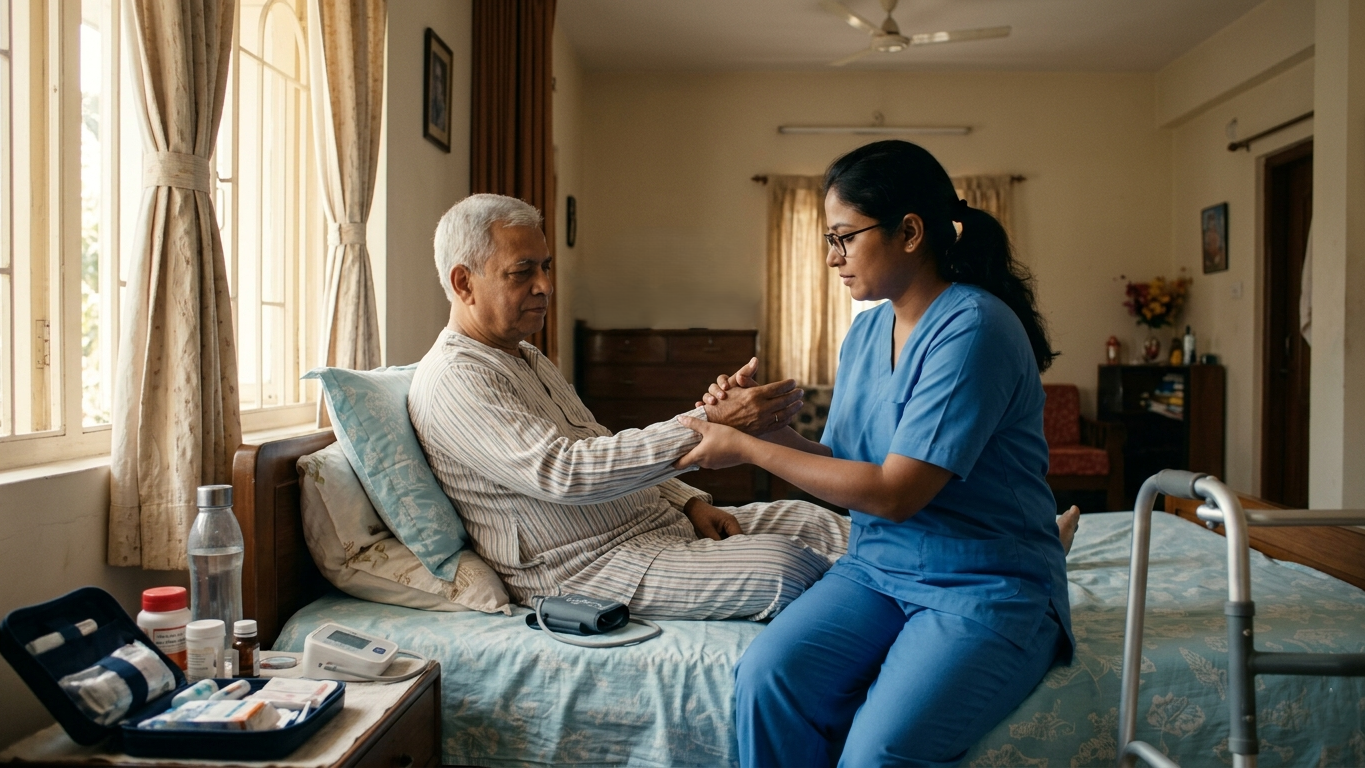
What is Stroke Recovery at Home?
Stroke recovery at home means caring for a person after a stroke in a safe and comfortable home environment. It focuses on helping the patient slowly get back their body strength, speaking ability, thinking power, and daily habits like eating, walking, and dressing.
After a stroke, the brain needs time to heal. Therefore, regular practice, simple exercises, and daily support at home help the brain learn again and improve step by step. This process is called rehabilitation.
In addition, home recovery gives emotional comfort because the patient stays close to family. As a result, they feel more confident and motivated to improve.
So, a clear and simple stroke recovery at home plan is very important. It helps the patient follow a routine, track progress, and recover in a better and safer way.
Why Home Care After Stroke is Important
After a stroke, a patient needs care every day, not just for a few days. However, staying in the hospital for a long time is not always possible. That is why stroke recovery at home becomes very important.
At home, the patient feels safe, relaxed, and less stressed. This peaceful environment helps the brain and body heal better. Also, family members are always nearby, so the patient gets love, support, and motivation, which is very important for recovery.
In addition, home care helps the patient practice daily activities again and again. For example, eating, walking, or speaking slowly improves with regular practice. Because of this, recovery becomes faster and more natural.
Another important point is cost. Hospital stays can be expensive. On the other hand, home care after stroke is more affordable and manageable for most families.
Moreover, proper care at home helps in preventing another stroke. Regular medicine, healthy food, and a simple routine reduce risk and keep the patient stable.
Finally, doctors and research studies show that regular rehabilitation and exercise play a big role in recovery. So, when patients follow a proper stroke recovery routine at home, they often see better improvement over time.
30-Day Stroke Recovery at Home Plan (Simple Guide)
This is a step-by-step 30-day stroke recovery plan. It is divided into 4 weeks.
Week 1: Safety & Basic Setup
Make the patient safe and stable
In the first week, the patient is usually weak and tired. So, the main focus is safety, comfort, and basic care. Do not rush; move slowly and carefully.
What to do:
1. Keep the bed near the bathroom – This helps the patient go to the toilet easily. As a result, there is less risk of falling.
2. Remove slippery things – Take away loose mats, water on the floor, or wires. This is important because the patient may lose balance easily.
3. Add hand support (grab bars) – Fix strong support bars near the bed and bathroom. So, the patient can hold and move safely.
4. Help the patient sit and stand slowly – Do not pull quickly. First, help the patient sit. Then, after a few seconds, help them stand. This prevents dizziness and falls.
5. Keep important things nearby – Keep water, medicine, phone, and bell close to the patient. So, they do not need to move too much.
6. Use a comfortable bed – The bed should not be too soft or too hard. Also, change the patient’s position every 2–3 hours to prevent bed sores.
Daily Routine:
- Slowly move arms up and down (10–15 minutes)
- Bend and straighten legs
- Open and close fingers
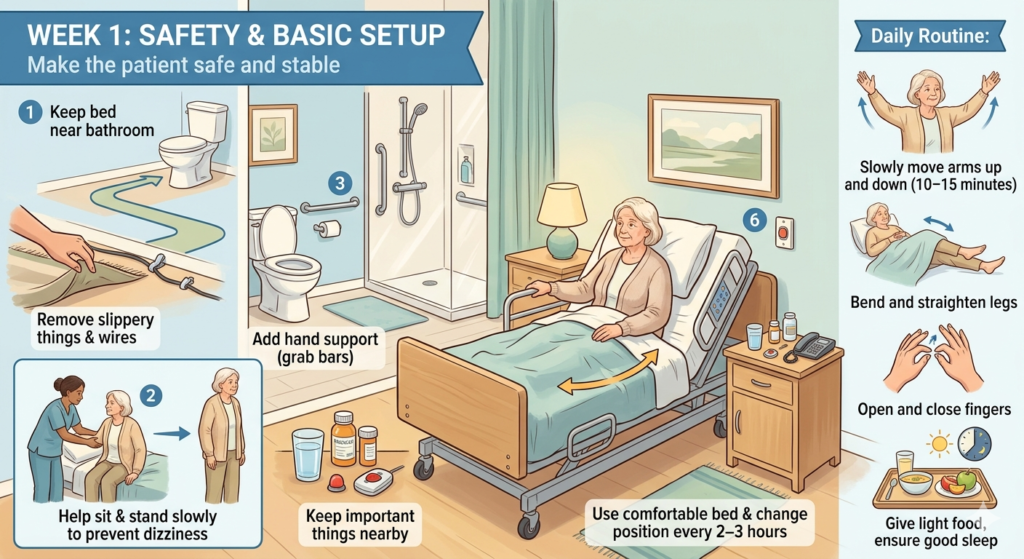
Give light food, and make sure the patient sleeps well.
Week 2: Daily Activities Training
Improve simple daily tasks
In Week 2, the patient slowly starts doing small daily activities. This is very important for Stroke Recovery at Home, because it helps the brain learn again.
What to do:
- Practice eating with your hand
- Try brushing and dressing
- Sit on a chair without support
Stroke rehab exercises at home:
- Finger opening and closing
- Arm lifting slowly
- Sitting balance practice
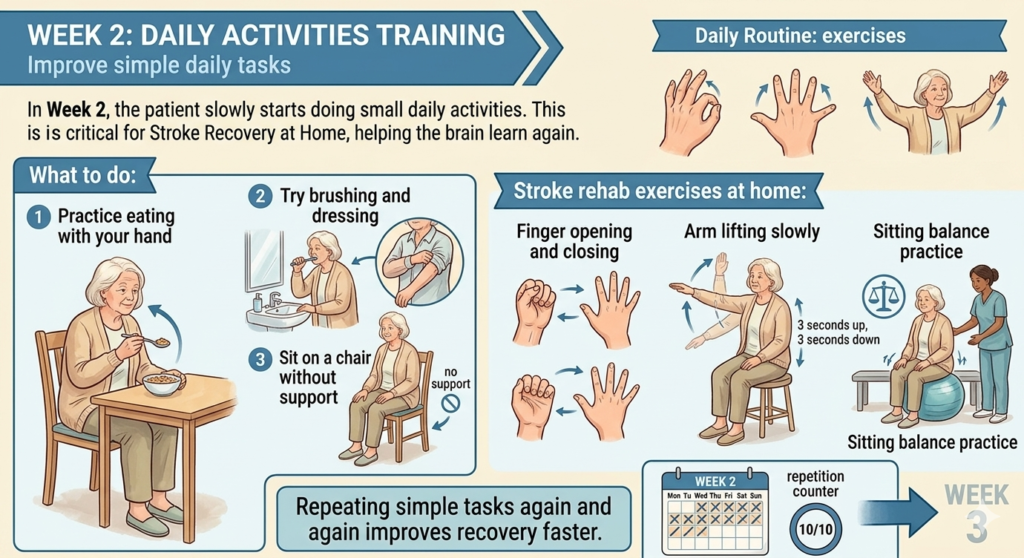
Repeating simple tasks again and again improves recovery faster.
Week 3: Strength & Mobility
Build strength and walking ability
In Week 3, the main goal is to make the body stronger and help the patient move more easily. By now, the patient may have some control. So, this is the right time to slowly increase activity.
What to do:
- Short walking with support
- Standing balance training
- Light stretching exercises
Stroke physiotherapy at home:
- Walking practice (5–10 minutes daily)
- Leg strengthening
- Shoulder rotation exercises
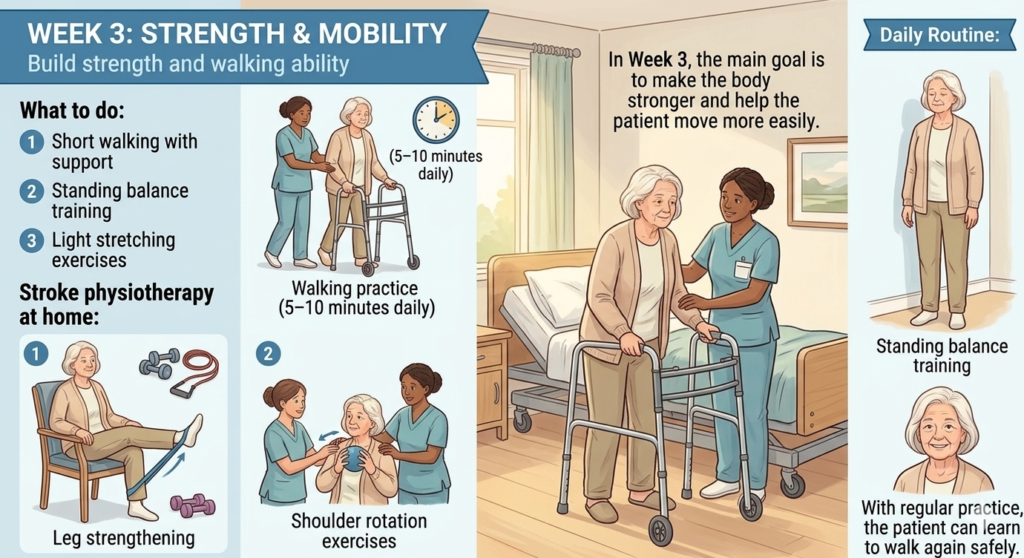
With regular practice, the patient can learn to walk again safely.
Week 4: Independence & Confidence
Make the patient independent
In this final week, the main focus is to build confidence and help the patient do things on their own. By now, the patient has gained some strength. So, this is the time to slowly return to normal daily life.
What to do:
- Try to walk inside the house without support (only if it is safe).
- Encourage the patient to do simple household work, like folding clothes or holding light items.
- Practice communication by giving chances to talk and express thoughts.
Activities:
- Play easy memory games (like remembering names or objects).
- Do daily talking practice with family members.
- Allow the patient to do light daily work.
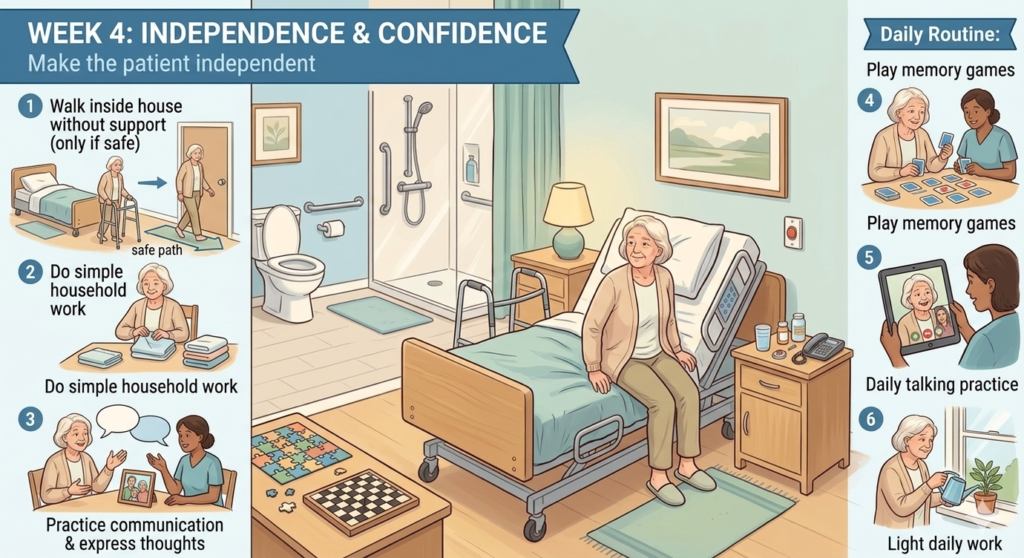
This stage helps patients return to normal life activities.
Daily Stroke Recovery Routine at Home
A simple daily routine helps the patient recover faster and feel more confident. When the same activities are done every day, the body and brain slowly improve. So, following a fixed schedule is very helpful for stroke recovery at home.
Morning:
Start the day with light exercise for 15–20 minutes to wake up the body. After that, give a healthy breakfast that is easy to eat and full of nutrition. Also, make sure all medicines are taken on time, because regular medication is very important.
Afternoon:
In the afternoon, the patient should take proper rest to save energy. Along with rest, practice simple speech or memory activities. This helps improve talking and thinking slowly.
Evening:
During the evening, short walking or physiotherapy is very important. It would be a wise decision to hire a physiotherapist at home at this time. It helps in improving strength and balance. At the same time, spending time with family gives emotional support and keeps the patient happy.
Night:
At night, give a light and healthy dinner so it is easy to digest. After that, the patient should go to bed early and get good sleep. Proper sleep helps the brain heal better.
A daily routine is very important for post-stroke recovery at home.
Stroke Patient Care at Home (Nurses Guide)
Taking care of a stroke patient at home is a big responsibility, but with the right approach, it becomes easier and more meaningful.
A nurse or caregiver is not just someone who helps with daily work; they are also a source of strength, comfort, and hope for the patient. After a stroke, many patients feel weak, confused, or even scared.
What caregivers should do:
First of all, they should help the patient with basic daily activities like eating food and moving from bed to chair. Many stroke patients feel weak, so gentle support is needed during walking, sitting, or changing position.
At the same time, giving medicines on time is very important because it helps control blood pressure, prevent another stroke, and support recovery.
Moreover, emotional support is equally important. Stroke patients may feel sad, frustrated, or scared. Therefore, caregivers should talk kindly, encourage them, and stay positive.
Caregivers or Nurses should always monitor small health changes. For example, they should notice any increase in weakness, difficulty in speaking, or unusual behaviour. If anything seems wrong, they should contact a doctor immediately.
It is important to understand that stroke patients often need help with walking, eating, and communication.
However, the caregiver or nurse should not do everything for them. Instead, they should encourage patients to try small tasks on their own, because regular practice helps in faster recovery and builds independence.
Stroke Nursing Care at Home
Stroke nursing care at home is very important, especially for patients who are weak or cannot move properly. A trained nurse helps the patient stay safe, clean, and comfortable.
1. Wound Care (if needed)
After a stroke, some patients may have wounds due to surgery, injury, or long bed rest. Therefore, proper wound care is very important.
- The nurse cleans the wound regularly
- Applies fresh dressing to prevent infection
- Checks for swelling, redness, or pus
- Uses safe and hygienic methods
2. Blood Pressure Monitoring
Blood pressure control is very important after a stroke. If it becomes too high or too low, it can be dangerous.
- The nurse checks blood pressure daily
- Records the readings for the doctor’s review
- Gives medicines on time (if prescribed)
- Watch for warning signs like headache or dizziness
Regular monitoring helps prevent another stroke.
3. Feeding Support
Many stroke patients face difficulty in eating or swallowing. So, proper feeding support is necessary.
- The nurse helps the patient eat slowly and safely
- Gives soft or liquid food if needed
- Ensures the patient does not choke
- Maintains proper nutrition and hydration
4. Bed Sore Prevention
Patients who stay in bed for a long time can develop bed sores. However, this can be prevented with proper care.
- The nurse changes the patient’s position every 2–3 hours
- Keeps the skin clean and dry
- Uses soft cushions or air beds
- Checks skin daily for redness or damage
This is very useful for serious patients.
Best Stroke Recovery Tips for Family
Here are the same tips so everyone can understand:
1. Be patient and calm
Recovery takes time. So, do not rush the patient. Sometimes progress is slow, and that is normal.
2. Encourage daily practice
Practice is very important for stroke recovery at home. Even small exercises every day can improve strength and movement.
3. Encourage little progress
Every small improvement matters. For example, if the patient can move a finger or sit properly, appreciate it.
4. Avoid stress and anger
If the family gets frustrated, the patient may feel scared or sad. So, always stay positive and avoid shouting or pressure.
5. Keep the environment positive
A happy and peaceful home helps with faster healing. You can talk kindly, play soft music, or spend quality time together. This creates a good mood for the patient.
Food for Stroke Recovery at Home
Healthy food is very important for stroke recovery at home. Also, good food improves energy and reduces weakness.
Beneficial to eat:
Fruits and vegetables
Fruits and vegetables are full of vitamins and minerals. They help the brain recover and keep the body strong. Try to give fresh cooked food and seasonal fruits every day.
Low salt food
Low salt food helps control blood pressure. High blood pressure is a major cause of stroke. So, always cook food with less salt and avoid extra salt on top. This keeps the heart and brain safe.
Protein (eggs, dal, fish)
Protein helps repair damaged body tissues. After a stroke, the body needs strength to recover. Therefore, foods like eggs, dal (lentils), fish, and chicken are very helpful. Give soft and easy-to-eat protein foods.
Plenty of water
Water keeps the body hydrated and supports brain function. It also helps in digestion and prevents weakness. Make sure the patient drinks water regularly throughout the day.
Should be avoided:
Junk food
Junk food like chips, burgers, and fried snacks is unhealthy. They contain high oil, salt, and bad fats. These foods can slow down recovery and increase health risks.
Smoking
Smoking is very dangerous after a stroke. It reduces oxygen supply to the brain and increases the chance of another stroke. Therefore, it should be completely stopped.
Alcohol
Alcohol can affect brain recovery and increase blood pressure. It also interacts with medicines. So, it is better to avoid alcohol completely during recovery.
A healthy lifestyle reduces the risk of another stroke.
When to Call a Doctor
It is very important to know when you should call a doctor during stroke recovery at home. Acting fast can save lives and prevent serious problems.
Call a doctor immediately if:
- Sudden weakness increases
- Chest pain
- Difficulty breathing
- Slurred or unclear speech
- Sudden confusion
- Trouble seeing
- Loss of balance
If any of these appear, it may be another stroke. So, call a doctor right away.
Final Thoughts
Stroke recovery at home is not a quick process, but it is possible with daily care and patience. Every small step matters. At first, progress may look slow. However, with regular exercise, proper food, and emotional support, the patient can slowly improve. Therefore, it is important to follow a simple daily routine and not skip therapy.
At the same time, family support plays a very big role. When patients feel safe and loved, they recover better. So, always talk kindly, motivate them, and celebrate even small improvements. This helps build confidence and reduces fear.
In addition, taking help from trained nurses or physiotherapists can make recovery faster and safer. Professional guidance ensures that exercises and care are done correctly. As a result, the chances of complications become lower.
Most importantly, do not lose hope. Stroke recovery at home needs time, effort, and consistency. Some days will be good, while others may feel difficult. Even then, continue the routine and stay positive.