

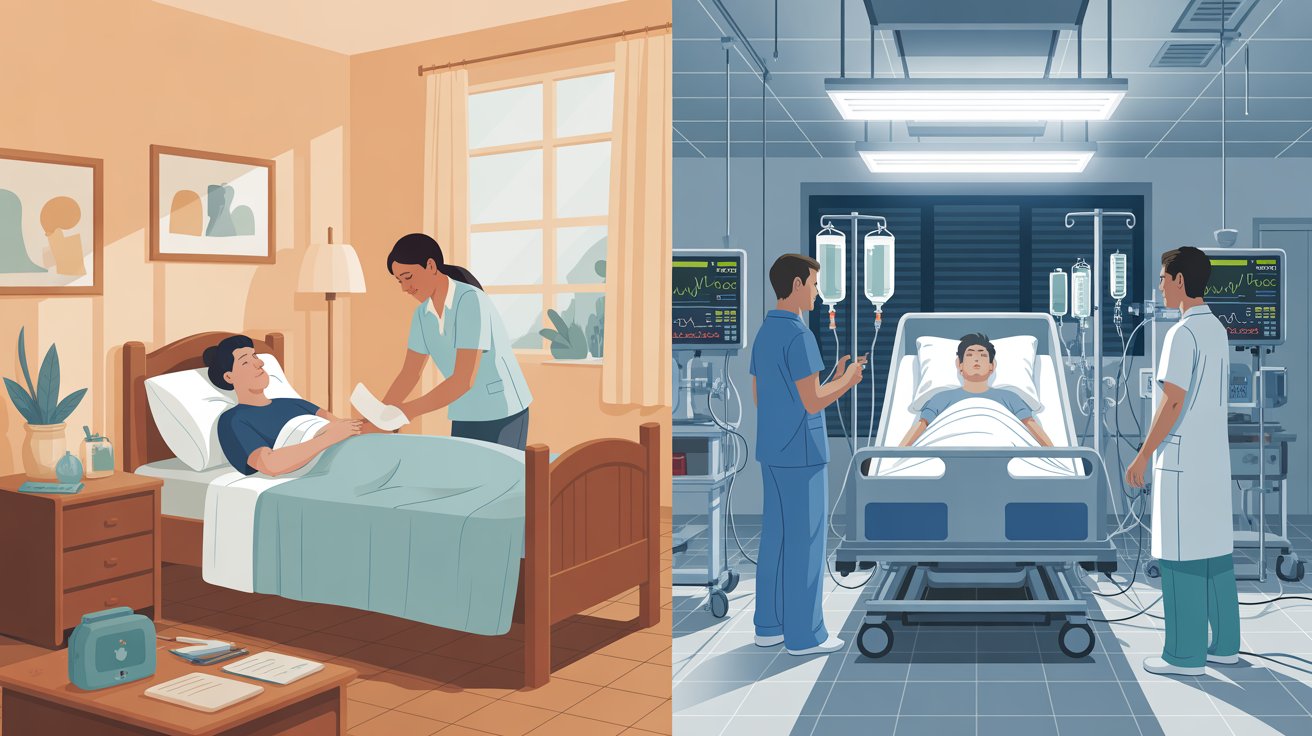
Healthcare decisions matter especially when choosing between home care and hospitalization. Whether you’re a caregiver, family member, or someone seeking care for yourself, it’s important to understand the benefits, limitations, costs, risks, and real-life impact of home care vs hospitalization. This comprehensive guide explains everything in simple language with valuable insights and high-intent keywords related to home care, hospitalization, home care vs hospitalization, benefits of home care, and when hospitalization is necessary.
Home Care and Hospitalization
Both have unique advantages, and the best choice depends on your health condition, medical needs, support system, and budget. This article explores the core differences between home care and hospitalization, and helps you make an informed choice.
What Is Home Care?
Home care refers to medical and non-medical support provided to patients in their own home. Home care services may include nursing care, doctor visits, physiotherapy, medication management, caregiver support, medical equipment, and daily living assistance with their needs.
Here’s how home care works:
A trained caregiver or nurse visits you at home
A trained caregiver or professional nurse visits the patient at home to provide safe and reliable medical care. This includes daily assistance, nursing support, post-hospital care, medication management, and recovery help. Home nursing care reduces the need for frequent hospital visits and ensures expert care in a comfortable home setting.
Care is personalized and scheduled based on your needs
Home care is personalized and planned according to your specific health condition and daily routine. The schedule is flexible, so care can be given for a few hours, overnight, or even 24/7 if needed. This personalized approach helps patients recover better because the care is designed just for them, not a fixed hospital routine.
You receive care in a familiar environment
Receiving care in a familiar environment helps patients feel relaxed and emotionally secure. Being at home, surrounded by family members, reduces stress and anxiety, which can speed up recovery. Patients often feel more confident and comfortable when they are cared for in their own home.
Home care focuses on comfort, independence, and long-term health support
Home care focuses on comfort, independence, and long-term health support rather than temporary treatment. With regular monitoring and compassionate care, patients can maintain their dignity and independence at home. Long-term home healthcare improves quality of life and supports better physical and emotional health.
In contrast to hospitalization, home care reduces stress and creates a healing environment close to family and loved ones.
What Is Hospitalization?
Hospitalization means a patient is admitted to a hospital to receive medical treatment under continuous supervision by doctors, nurses, and medical staff. During hospitalization, the patient stays in a hospital room or ward where all tests, treatments, medicines, and emergency care are provided in one place.
Intensive monitoring
Intensive monitoring in a hospital allows healthcare professionals to regularly check vital signs such as blood pressure, heart rate, and oxygen levels. Any sudden change in the patient’s condition can be identified quickly, helping doctors take immediate action when needed.
Advanced treatments
Hospitals provide advanced treatments that are not available at home. These include specialized medicines, high-end medical equipment, and expert care from multiple specialists. Such treatments are necessary for severe illnesses, injuries, or complicated medical conditions.
Emergency procedures
Emergency procedures are handled best in a hospital setting because all required facilities are available in one place. In life-threatening situations like heart attacks, accidents, or severe infections, hospitals can respond immediately to save lives.
Complex surgeries
Complex surgeries are performed in hospitals where operating theatres, anaesthesia support, and post-surgery care units are available. These surgeries require advanced technology and a team of skilled doctors to ensure patient safety and proper recovery.
When comparing home care vs hospitalization, hospitalization is most recommended for critical care.
Differences Between Home Care and Hospitalization
Home care and hospitalization both play important roles in patient treatment, but they are suitable for different needs. Home care allows patients to receive medical support such as nursing care, physiotherapy, and monitoring while staying in the comfort of their own home.
Being in a familiar environment helps reduce stress, improve emotional well-being, and support faster recovery. Home care also offers personalized one-to-one attention, lower costs, and a reduced risk of hospital-acquired infections. Family members can stay closely involved in the patient’s care, which builds trust and confidence.
| Aspect | Home Care | Hospitalization |
|---|---|---|
| Place of Care | Patient receives treatment at home | Less comfort due to the clinical setting |
| Comfort Level | High comfort in a familiar environment | Less comfort due to clinical setting |
| Cost | Generally more affordable | Usually more expensive |
| Personal Attention | Patient stays admitted to a hospital | Shared attention among multiple patients |
| Risk of Infection | Lower risk of hospital-acquired infections | Higher risk of cross-infection |
| Family Involvement | Family can stay involved in daily care | Limited family involvement |
| Emotional Well-being | Better emotional and mental comfort | Can feel stressful or isolating |
| Flexibility | Flexible care plans and timings | Fixed hospital schedules |
| Best For | Elderly, chronic patients, post-surgery recovery | Critical, emergency, or complex cases |
Choosing between home care and hospitalization depends on the patient’s medical condition, stability, and recovery needs. For stable patients, elderly care, and post-hospital recovery, home care is often a safe, comfortable, and cost-effective option, while hospitals remain the best choice for serious and emergency conditions.
Benefits of Home Care
Understanding the benefits of home care plays a big role in deciding home care vs hospitalization. Key benefits include:
Comfort and Familiarity
Home care allows patients to stay in a familiar and comfortable environment. Being at home helps reduce stress, fear, and anxiety that often come with hospital stays. Patients feel more relaxed sleeping in their own bed, eating home food, and being surrounded by loved ones, which supports faster recovery.
Lower Costs
Home care is often more affordable than long hospital stays. You only pay for the services you need, such as nursing care, physiotherapy, or caregiver support. This helps families manage medical expenses better while still receiving quality healthcare at home.
Personalized Care
Home care is designed around the patient’s specific health condition and daily routine. Care plans are customized to meet individual needs, ensuring focused attention and better outcomes. Unlike hospitals, caregivers can give one-on-one care, which improves safety and comfort.
Reduced Risk of Hospital Infections
Staying at home lowers the risk of infections that are commonly found in hospitals. Patients are less exposed to germs and viruses, making home care a safer option, especially for elderly patients or those with weak immunity.
Family Involvement
Home care allows family members to be actively involved in the patient’s care and recovery. They can monitor progress, provide emotional support, and communicate easily with caregivers. This involvement builds trust and helps patients feel emotionally strong and supported.
Because of these advantages, many families prefer home care over hospitalization and take long-term treatment for non-critical conditions.
Key Advantages of Hospitalization
Hospitalization plays an important role in treating serious illnesses and medical emergencies. When a patient needs continuous medical attention, advanced equipment, or immediate care, staying in a hospital becomes the safest option.
24/7 Medical Supervision
One of the biggest advantages of hospitalization is round-the-clock monitoring. Doctors, nurses, and medical staff are available all the time to check vital signs, give medicines on time, and respond quickly to any sudden change in the patient’s condition.
Access to Advanced Medical Equipment
Hospitals are equipped with modern machines like ventilators, ICU monitors, CT scans, MRI, and laboratory facilities. These advanced tools help doctors diagnose problems accurately and start the right treatment without delay.
Immediate Emergency Care
In critical situations such as heart attacks, strokes, accidents, or severe infections, hospitalization ensures instant emergency care. Quick medical response can save lives and prevent complications.
Specialized Doctors and Multidisciplinary Care
Hospitals have specialist doctors from different fields such as cardiology, neurology, orthopedics, and surgery. This allows patients to receive expert opinions and combined care under one roof, which improves treatment outcomes.
Suitable for Complex and Serious Conditions
Hospitalization is ideal for patients with severe illnesses, post-surgery recovery, high-risk pregnancies, or chronic conditions that require close observation and advanced treatment.
Faster Diagnosis and Treatment
Since all medical services like tests, scans, doctors, and medicines are available in one place, hospitalization helps in faster diagnosis and timely treatment, reducing the risk of delays.
Structured Care and Recovery Plan
Hospitals follow a well-planned treatment and recovery process. From admission to discharge, every step is managed systematically, ensuring proper care and follow-up instructions.
Cost Comparison: Home Care vs Hospitalization
In healthcare, cost plays a very important role for patients and families. Understanding the cost comparison between home care and hospitalization helps in making a smart and practical decision.
Cost of Care at Home
Home care is usually more affordable than hospitalization . In-home care, you pay only for the services you need, such as nurse visits, doctor consultations at home, physiotherapy, or medical equipment rental. There are no extra charges for hospital rooms, food, or unnecessary tests. Because treatment happens at home, daily expenses stay under control.
Home care is a cost-effective option for long-term care, elderly care, post-surgery recovery, and chronic illness management.
Cost of Hospitalization
Hospitalization is often expensive due to multiple added costs. These include room charges, ICU fees, nursing charges, medicines, diagnostic tests, and hospital service fees. Even for short stays, the total hospital bill can increase quickly. For long-term treatment, hospitalization can become a heavy financial burden for families.
In most cases, home care is more budget-friendly than hospitalization. Home care reduces unnecessary expenses while still providing quality medical support. Hospitalization is best for emergencies or critical conditions, but for stable patients, home care offers safe treatment at a much lower cost.
From a financial perspective, home care clearly stands out as a cost-saving and practical choice. It provides quality care, comfort, and medical support without the high expenses of hospital stays.
Right Time: Home Care and Hospitalization
Choosing the right type of care at the right time is very important for a patient’s recovery. Many families often get confused between home care and hospitalization. Both options are helpful, but they are meant for different situations. Understanding when to choose home care and when hospitalization is necessary can save time, money, and stress.
When Home Care Is Better
Home care allows patients to heal in a familiar environment with personalized attention and emotional comfort. Home care is the right choice when the patient is stable and needs-
- To recover from a mild illness
- For long-term or chronic condition support
- When you require caregiving help at home
- To avoid hospital stress
- If you want to reduce the medical costs
In these cases, home care can improve recovery and quality of life while lowering overall costs.
When Hospitalization Is Better
Hospitalization is the right option when a patient needs-
- Severe illness or injury
- Need for immediate emergency treatment
- Surgery and post-operative monitoring
- Critical condition requiring 24/7 supervision
- Advanced diagnostic procedures
The right time to choose between home care and hospitalisation depends on the patient’s condition, the doctor’s advice, and the level of medical support needed.
Risks and Challenges: Home Care vs Hospitalization
While both options serve important roles, each has potential risks.
Home Care Risks
🔹 Limited 24/7 monitoring
🔹 Dependency on caregiver availability
🔹 May require frequent hospital visits if condition worsens
Hospitalization Risks
🔹 Higher cost
🔹 Hospital-acquired infections
🔹 Emotional stress in a clinical environment
Understanding these risks helps families decide which is better: home care or hospitalization for their loved ones.
Expert Tips for Choosing Home Care or Hospitalization
Here are top tips to help you decide:
📌 Consult your doctor first
📌 Review medical history and tests
📌 Understand your home care provider’s credentials
📌 Consider insurance coverage
📌 Prepare a backup plan if condition worsens
These steps ensure that your choice between home care and hospitalization is safe, informed, and personalized.
- Summary: Which Is Better
So, which is better: home care or hospitalization?
🟢 Home care is better for everyday support, recovery from minor conditions, chronic disease management, lower costs, comfort, and personalized care.
🔵 Hospitalization is better for emergencies, critical conditions, complex surgeries, and continuous medical supervision.
In many cases, a combination of both — hospital treatment followed by home care — may offer the best outcome.
Frequently Asked Questions (FAQs)
- Is home care better than hospitalization for elderly patients?
Home care can be better for stable elderly patients who need daily support, while hospitalization is necessary for serious medical emergencies.
- Can home care replace hospitalization completely?
Not for serious or life-threatening conditions. Home care supports recovery and daily care but hospitalization is essential when advanced medical intervention is required.
- Does health insurance cover home care?
Coverage depends on your insurance policy. Always check with your provider for home care benefits.
- Which is more affordable: home care or hospitalization?
Generally, home care is more affordable because it avoids hospital room and facility charges.
- How do I choose between home care and hospitalization?
Consult your physician, evaluate your health condition, consider costs, and determine your support system at home.
Conclusion
Deciding “Which is better: home care or hospitalization?” isn’t one-size-fits-all. Consider your health needs, costs, support system, and medical advice. Home care is ideal for comfort, recovery, and long-term support, while hospitalization is essential for emergencies and complex medical care.
Make your choice wisely — and seek professional guidance whenever needed.
A WordPress Commenter
July 12, 2025 - 12:18 pmHi, this is a comment. To get started with moderating, editing, and deleting comments, please visit the Comments screen in the dashboard. Commenter avatars come from Gravatar.