

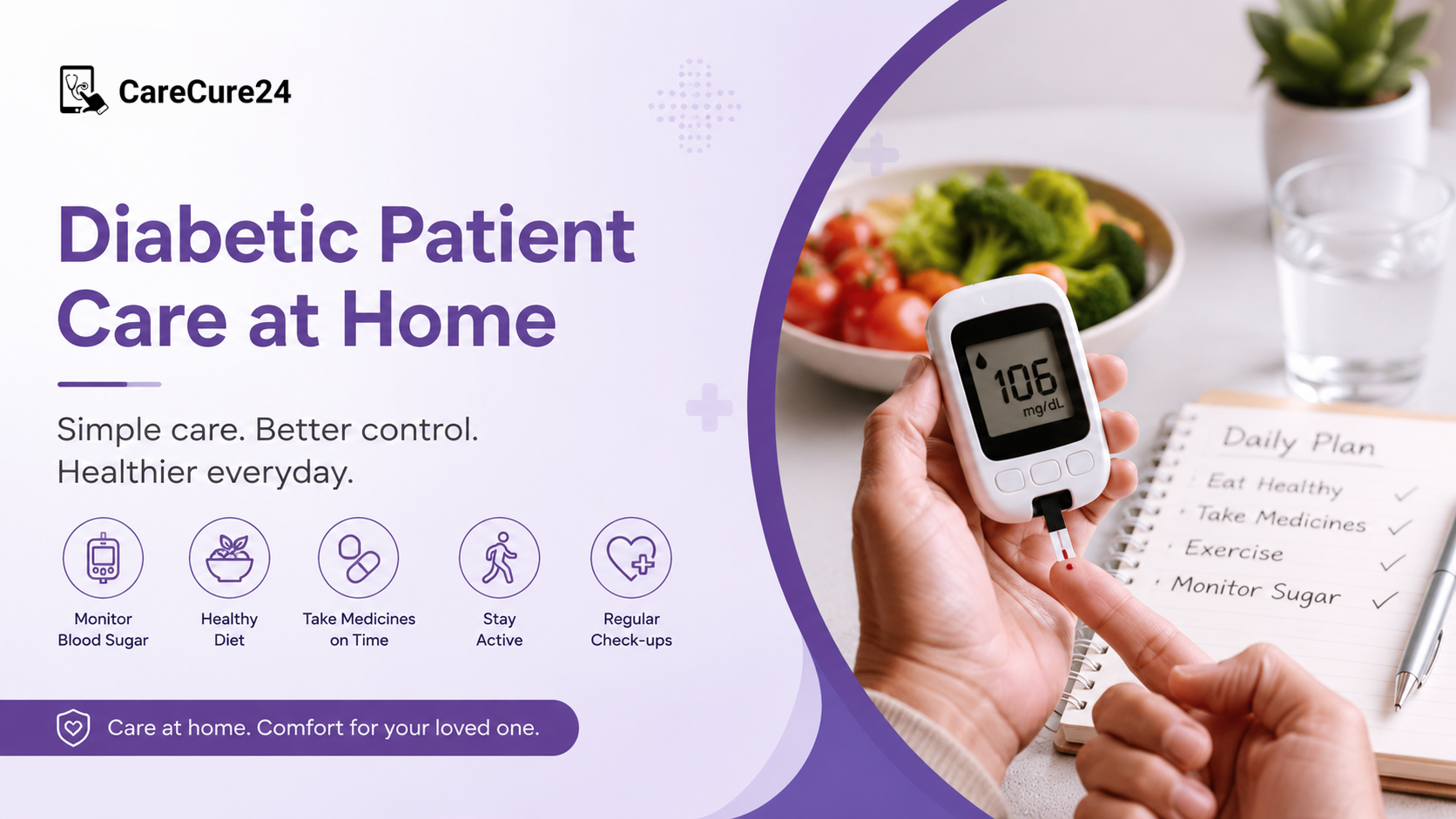
Diabetes is a long-term health problem. It happens when the body cannot control blood sugar properly. Many people with diabetes live normal lives. However, they need proper daily care.
Good diabetic patient care at home helps control blood sugar, prevents serious health problems, and improves quality of life.
Many families choose home care because it is safe, comfortable, and affordable. Patients also feel happier when they stay with their loved ones. Moreover, regular care at home reduces the chance of hospital visits.
Therefore, learning the right home care steps is very important.
What is Diabetic Patient Care at Home?
Diabetic patient care at home means giving daily support to a person with diabetes in their own home. It includes checking blood sugar, giving medicines, preparing healthy meals, helping with exercise, and watching for warning signs.
Home care also includes emotional support. Many diabetic patients feel worried about their condition. Therefore, family members and caregivers should encourage them every day.
Why is Home Care Important for Diabetic Patients?
Good home care offers many benefits.
- Better blood sugar control
- Lower risk of diabetes complications
- Comfortable recovery at home
- Fewer hospital visits
- Better medication management
- Healthy daily routine
- Emotional support from family
- Improved quality of life
As a result, patients can stay healthier for many years.
Daily Blood Sugar Monitoring
Checking blood sugar is one of the most important parts of diabetic patient care at home.
A glucometer is used to measure blood sugar levels. Patients should check their sugar levels as advised by their doctor. They should also keep a daily record. This record helps doctors understand whether the treatment is working well.
If blood sugar becomes too high or too low, medical advice should be taken immediately.
Healthy Diet for Diabetes
Food plays a big role in diabetes management. Therefore, patients should eat healthy meals every day.
A diabetic-friendly diet includes:
- Fresh vegetables
- Whole grains
- Brown rice in limited amounts
- Fruits with low sugar
- Lentils and beans
- Fish and skinless chicken
- Eggs
- Low-fat milk products
Patients should avoid:
- Sugary drinks
- Sweets
- Cakes
- White bread
- Fried foods
- Fast food
- Too much salt
- Processed snacks
Eating small meals several times a day can also help control blood sugar.
Take Medicines on Time
Medicine is very important for diabetes treatment. Patients should never skip their medicines.
Some people take diabetes tablets, while others need insulin injections. Caregivers should make sure medicines are taken at the correct time every day.
Never change the medicine dose without talking to the doctor.
Stay Physically Active
Exercise helps the body use insulin better. It also keeps blood sugar under control.
Simple activities include:
- Walking for 30 minutes
- Light stretching
- Chair exercises
- Yoga
- Slow cycling
However, patients should stop exercising if they feel dizzy, weak, or have chest pain.
Drink Enough Water
Water helps keep the body healthy. It also prevents dehydration.
Most diabetic patients should drink enough water throughout the day unless their doctor advises otherwise.
Sugary drinks should be avoided because they quickly increase blood sugar.
Foot Care is Very Important
Diabetes can damage the nerves in the feet. Therefore, even a small cut can become serious.
Patients should:
- Wash their feet every day
- Dry feet carefully
- Wear clean socks
- Wear comfortable shoes
- Check feet for cuts, swelling, or redness
If any wound does not heal, they should visit a doctor immediately.
Watch for Warning Signs
Family members should know the warning signs of diabetes problems.
Call a doctor if the patient has:
- Very high blood sugar
- Very low blood sugar
- Severe weakness
- Confusion
- Blurred vision
- Chest pain
- Difficulty breathing
- Continuous vomiting
- Unconsciousness
Quick treatment can prevent serious complications.
Emotional Support Matters
Living with diabetes can be stressful. Therefore, family support is very important.
Talk kindly to the patient. Encourage healthy habits. Celebrate small improvements. Positive support helps patients stay motivated.
When is a Home Nurse Needed?

Some diabetic patients need professional nursing care.
A trained home nurse can help with:
- Insulin injections
- Blood sugar monitoring
- Wound dressing
- Diabetic foot care
- Medicine management
- Elderly diabetes care
- Health monitoring
- Doctor communication
Professional home nursing gives extra safety, especially for elderly patients.
Tips for Family Caregivers
Family members should follow these simple tips:
- Follow the doctor’s advice.
- Keep medicines ready.
- Prepare healthy meals.
- Help with daily exercise.
- Monitor blood sugar regularly.
- Watch for emergency symptoms.
- Encourage enough sleep.
- Keep emergency contact numbers nearby.
Small daily efforts make a big difference.
Conclusion
Proper diabetic patient care at home helps patients live healthier and happier lives. Daily blood sugar checks, healthy food, regular exercise, medicines, and emotional support all work together to control diabetes.
Moreover, early medical attention can prevent many serious problems. With the right home care, diabetic patients can enjoy a better quality of life while staying safe and comfortable at home.
Frequently Asked Questions (FAQs)
1. How often should blood sugar be checked?
The frequency depends on the doctor’s advice. Some patients check once a day, while others may need several checks daily.
2. What foods should diabetic patients avoid?
They should avoid sugary drinks, sweets, cakes, fried foods, white bread, and processed snacks.
3. Can a diabetic patient exercise every day?
Yes. Most patients benefit from regular light exercise such as walking, stretching, or yoga after medical advice.
4. When should a diabetic patient call a doctor?
They should seek medical help if blood sugar becomes very high or very low, if they feel confused, have chest pain, difficulty breathing, or if a foot wound does not heal.